Inside Medieval Minds Essay: Why Saint Cross Never Forgot What It Was
Medieval hospitality and service, rule and lived discipline
This essay is distilled from a chapter of Inside Minds: The Long Memory of Britain, a developing narrative history book bringing Britain’s heritage to life through historical research, original fieldwork, and documentary photography. Each chapter uses immersive storytelling to explore past beliefs, rituals, and institutions and to trace their enduring influence into the present.
In this shorter essay, I focus on the historical question, fieldwork, and evidence to present the central argument that emerges from my research into medieval Saint Cross. I hope it provides an enlightening introduction to the discoveries and ideas that I explore more fully in the book.
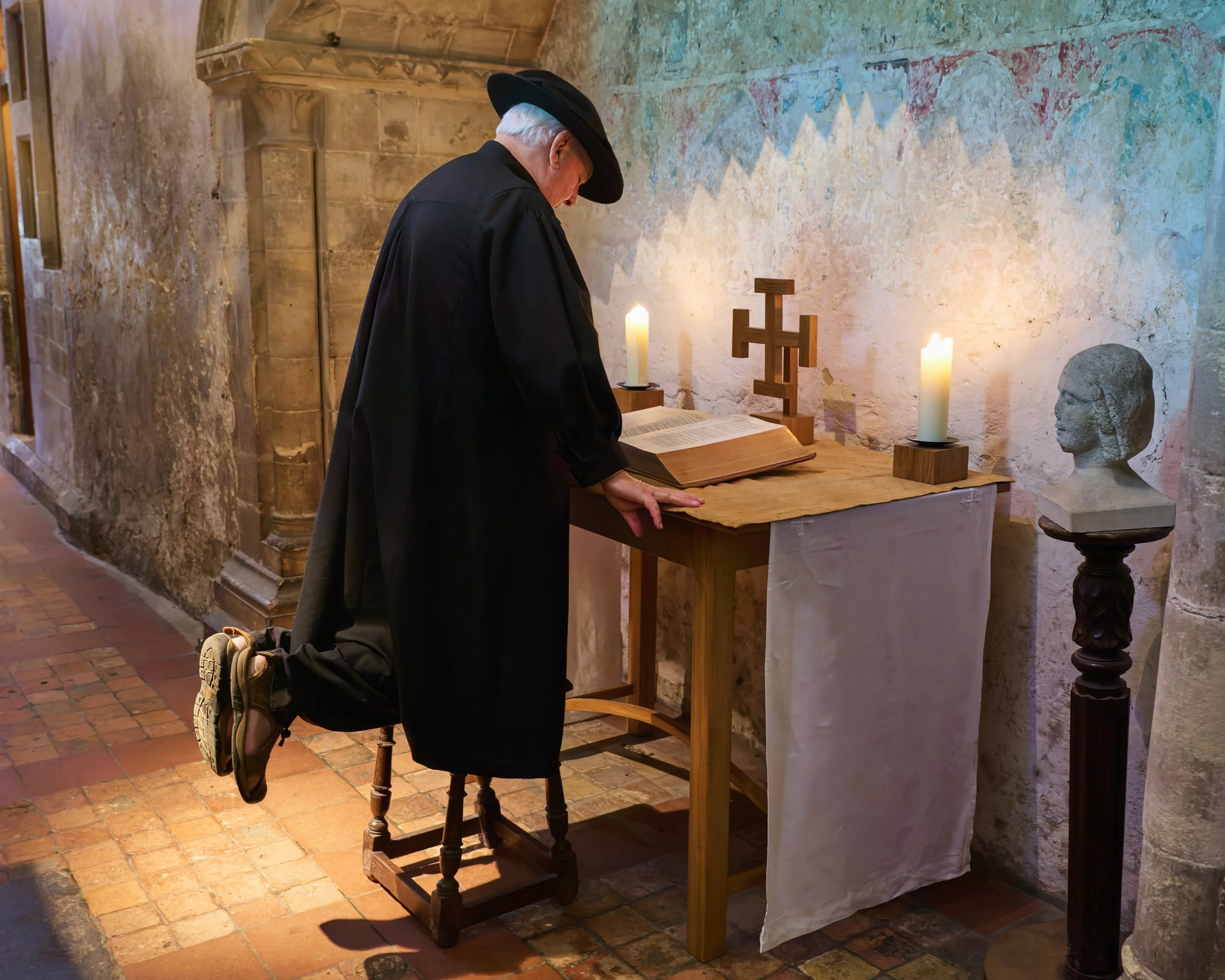
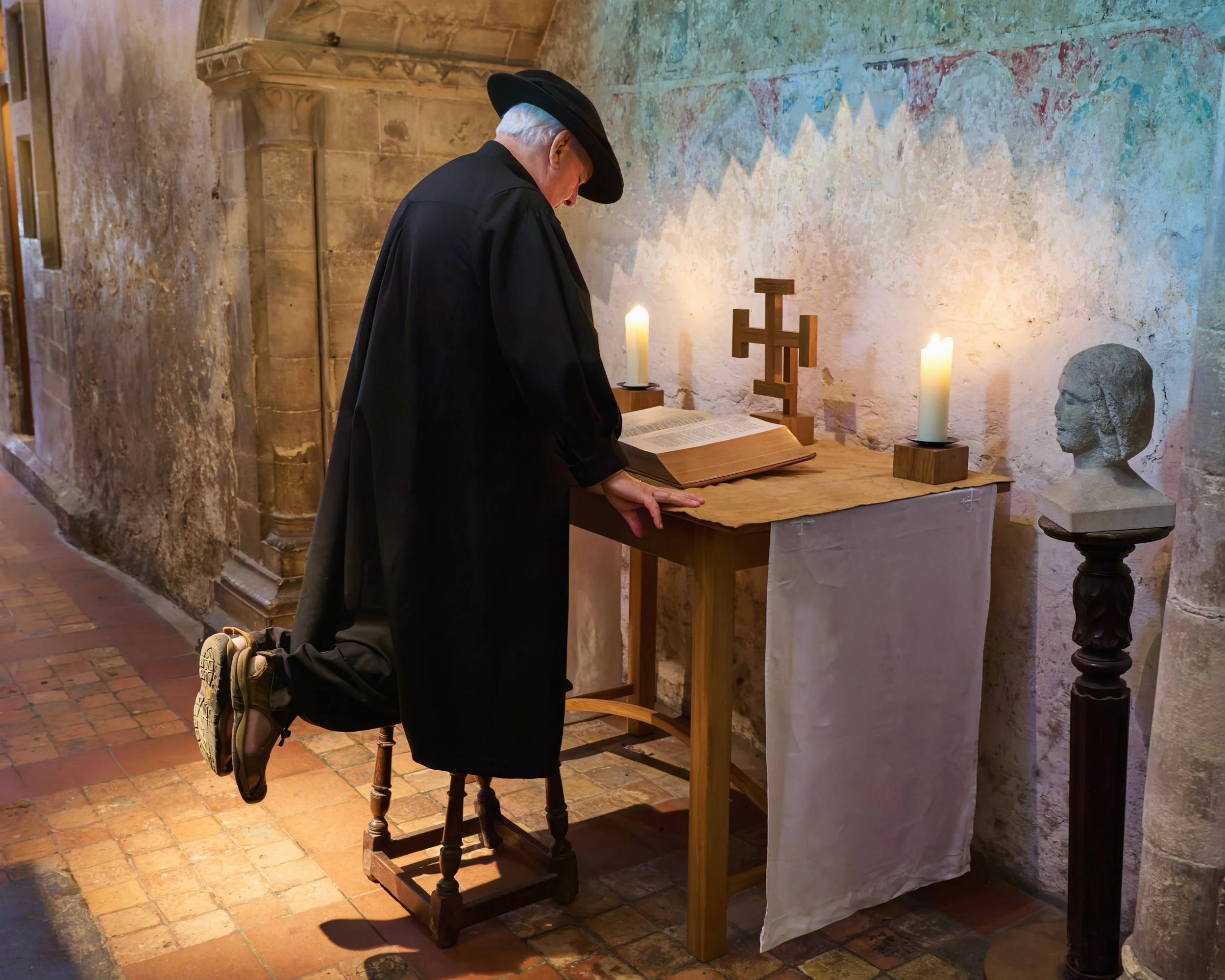
Faded medieval wall paintings provide later layers of devotion within a space shaped by centuries of prayer. © Martin Urch
Introduction
Step beyond the historic centre of Winchester, and you can enter an institution whose story has continued for almost nine hundred years. The Hospital of Saint Cross still has its medieval church, almshouses and courtyards, but what makes it remarkable is not simply the survival of its buildings. It remains a living charitable community.
Founded by Henry of Blois, Bishop of Winchester and grandson of William the Conqueror, Saint Cross emerged during one of the most turbulent periods in English history. England in the 1130s was descending into the civil war later known as The Anarchy. King Stephen and Empress Matilda contested the throne, castles multiplied across the landscape, and contemporary chroniclers described a kingdom in which “Christ and His saints slept.”
Amid this disorder, Saint Cross offered something very different: prayer, food, shelter and routine. Henry created a charitable institution in which the poor could be fed, and resident Brothers supported. By 1152, he had placed Saint Cross under the administration of Raymond du Puy and the Hospital of St John of Jerusalem — the Knights Hospitaller. Prayer, discipline, hospitality and service became woven into the institution’s identity.
Hundreds of medieval religious and charitable foundations once occupied the English landscape. Many disappeared. Others survived physically but lost the purpose for which they had been created.
Saint Cross did neither.
My fieldwork took me inside this surviving institution, where I joined the Brothers for Matins, witnessed the ancient Pay Parade and began looking beyond the medieval architecture for something less tangible.
How did Saint Cross remember what it was for almost nine centuries?
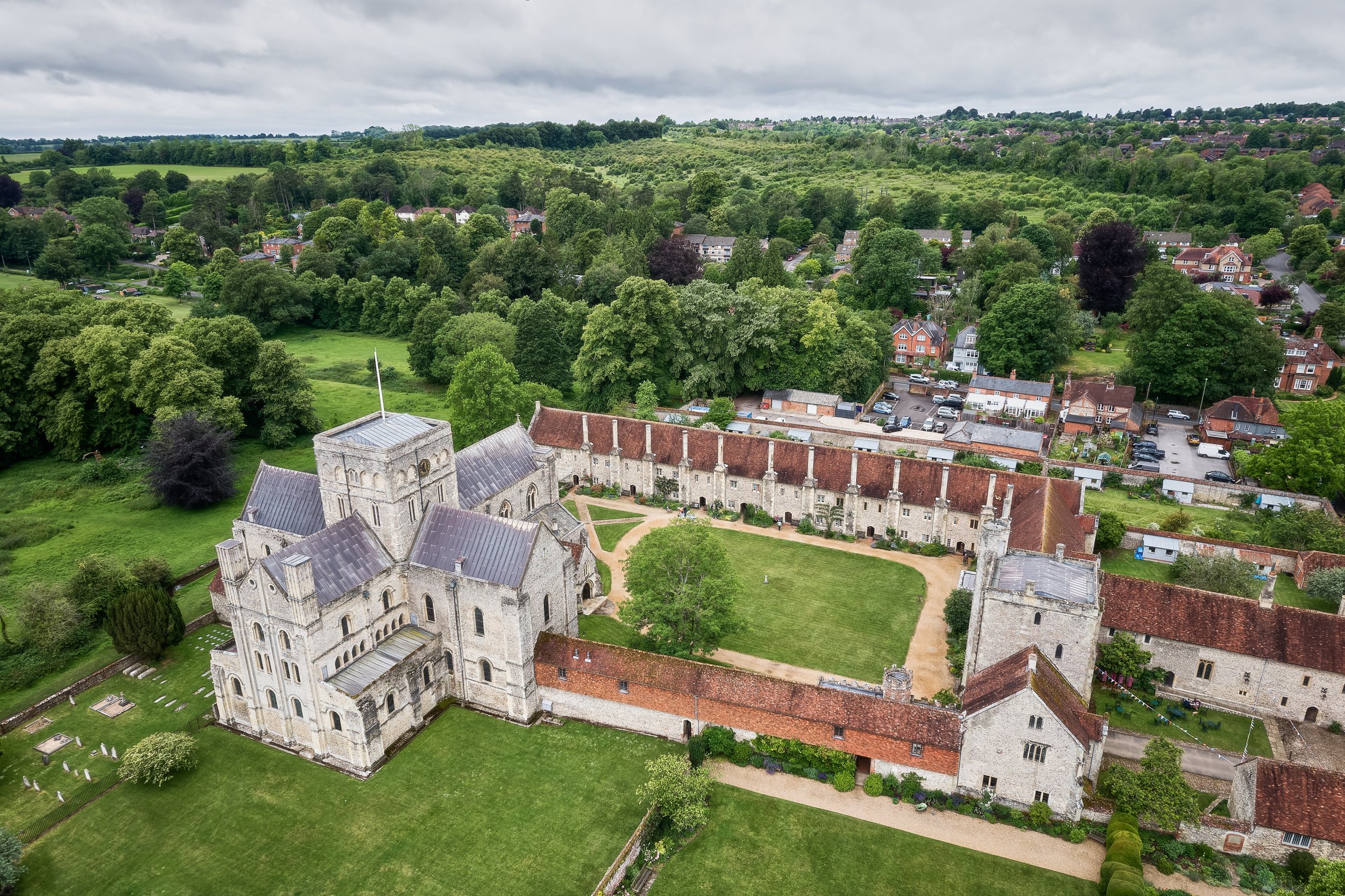
Aerial view of Saint Cross Church, Ambulatory, Tower and Almshouses © Martin Urch
Fieldwork
Looking for an institution, not simply a building
Historical records and archaeology can help reconstruct medieval Saint Cross. They can tell us about buildings, benefactors, administration and religious practice. But they cannot fully explain why beliefs, rituals and behaviours endure.
That became the question behind my fieldwork.
I was interested not simply in what medieval fabric had survived, but whether anything less tangible had endured with it. Could an institution founded during a twelfth-century civil war still carry something of the mental world that gave rise to it?
My fieldwork began with a guided tour led by Brother John Leathes, the longest-serving Red Brother. As we walked through the church and grounds, apparently separate details began to accumulate.
There was the name itself: Saint Cross. Near the church entrance hangs the Jerusalem Cross associated with the Knights Hospitaller. Elsewhere, the words "Have Mynde" are embedded in the fabric of the institution. The Brothers also pointed to Saint Cross’s unusual constitutional status as a Royal Peculiar.
Individually, these could be treated as historical curiosities.
Together, they suggested something more important.
Saint Cross appeared to have preserved not merely buildings and traditions, but a remarkably durable sense of identity.
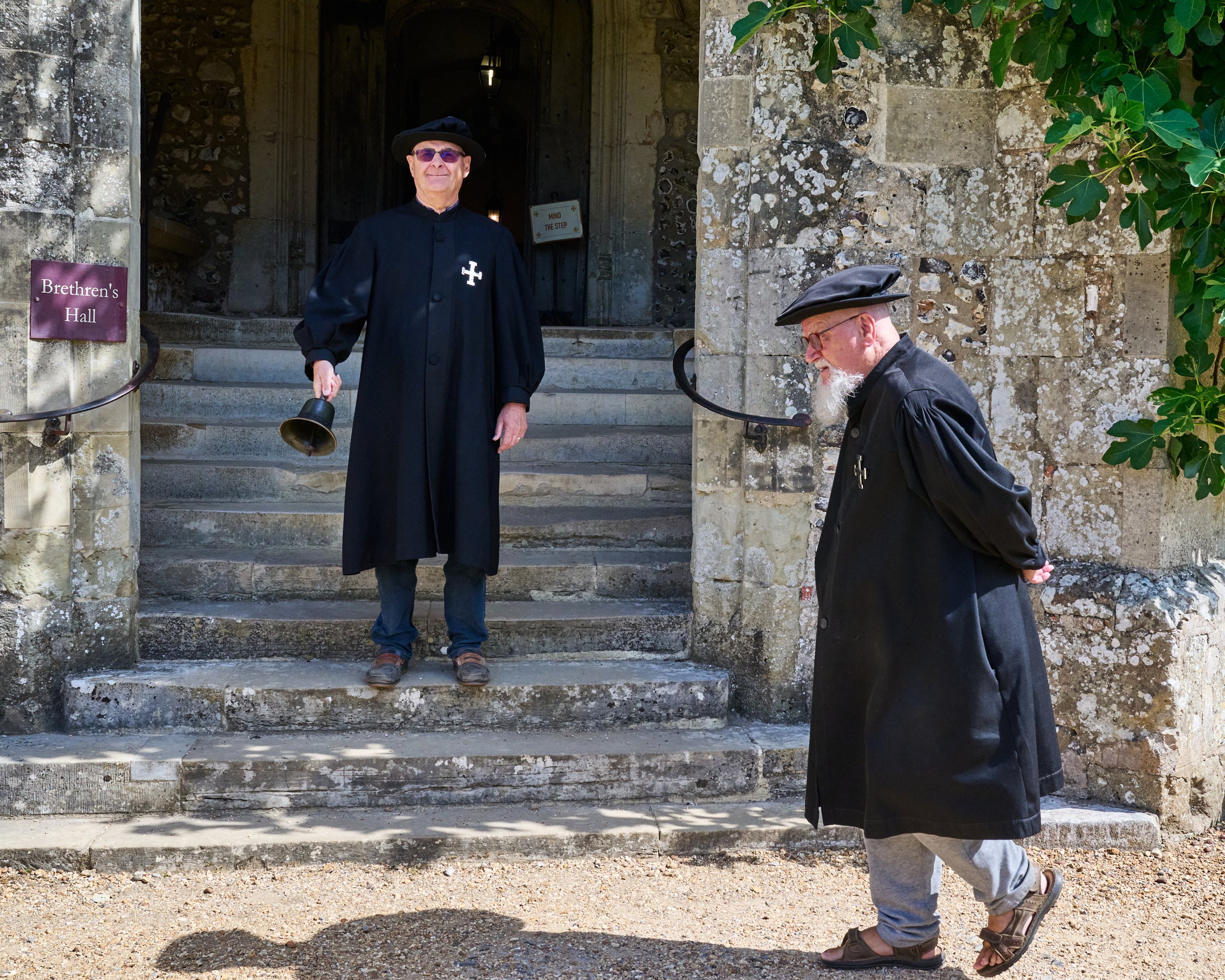
Time is governed by the bell. The newest Black Brother calls for attendance at Pay Parade via the bell. © Martin Urch
The bell still governs the day
The clearest evidence came not from architecture, but from watching the community itself.
Father Dominik Chmielewski, Master of Saint Cross, invited me to attend Matins. At ten o’clock, the church tower bell sounded, and the Brothers rose together.
Black-robed Brothers gathered in the nave, while the Red Brothers of Cardinal Beaufort’s fifteenth-century Alms-house of Noble Poverty occupied the choir stalls. The service unfolded through prayers, psalms, readings, chants and responses.
What struck me was its disciplined rhythm.
At one point Father Dominik chanted a versicle. The Brothers answered and, without instruction, turned together towards the Cross above the altar.
It was a small movement, but its precision gave it significance. These were individuals acting as a community through an inherited ritual.
Afterwards, Father Dominik spoke about recently departed Brothers and forthcoming funeral arrangements. The words Have Mynde suddenly seemed less like a surviving medieval motto and more like a description of something still practised.
Remember.
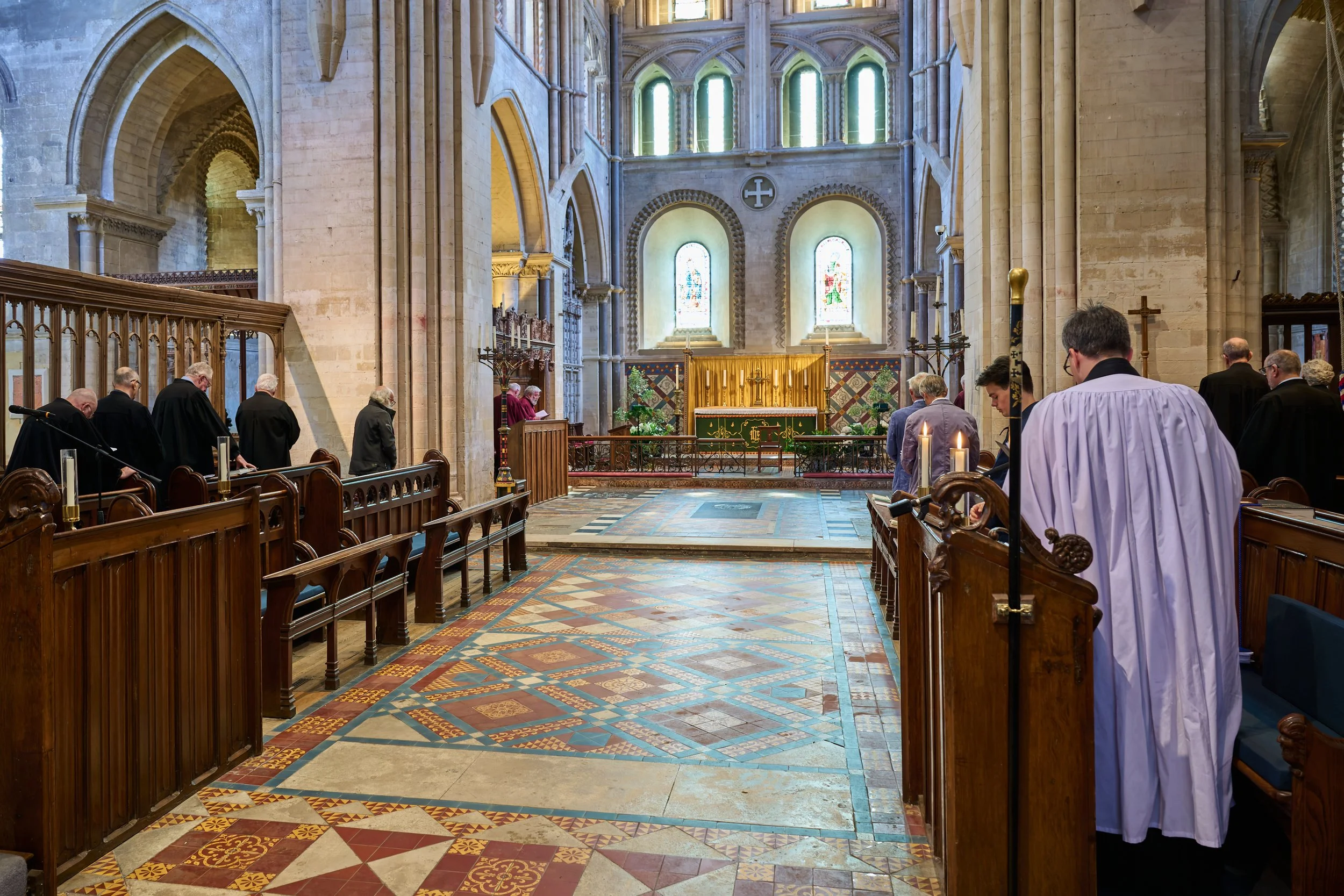
The Master and the Brothers turned together to face the Cross during the Matins service © Martin Urch
An obligation survives its original necessity
Immediately after Matins, something very different came.
The Brothers crossed the courtyard towards Brethren’s Hall. The newest Black Brother rang a handbell, summoning the community to Pay Parade.
The Brothers remained in their historic robes while Father Dominik called each forward in turn. A Trustee presented a small leather pouch containing symbolic coins. Many were promptly tossed back onto the table with considerable good humour.
The ceremony is no longer economically necessary. Yet that is precisely what makes it interesting.
From its foundation, Saint Cross existed not simply to accommodate its Brothers but to provide for their material needs. Pay Parade preserves a visible expression of that responsibility long after its practical form has changed.
The ritual has survived because the idea behind it survived.
Names are still called. Provision is still symbolically distributed. The community still assembles. Fellowship is renewed.
The medieval practice has not been frozen in time. It has been repeatedly adapted while retaining its underlying meaning.
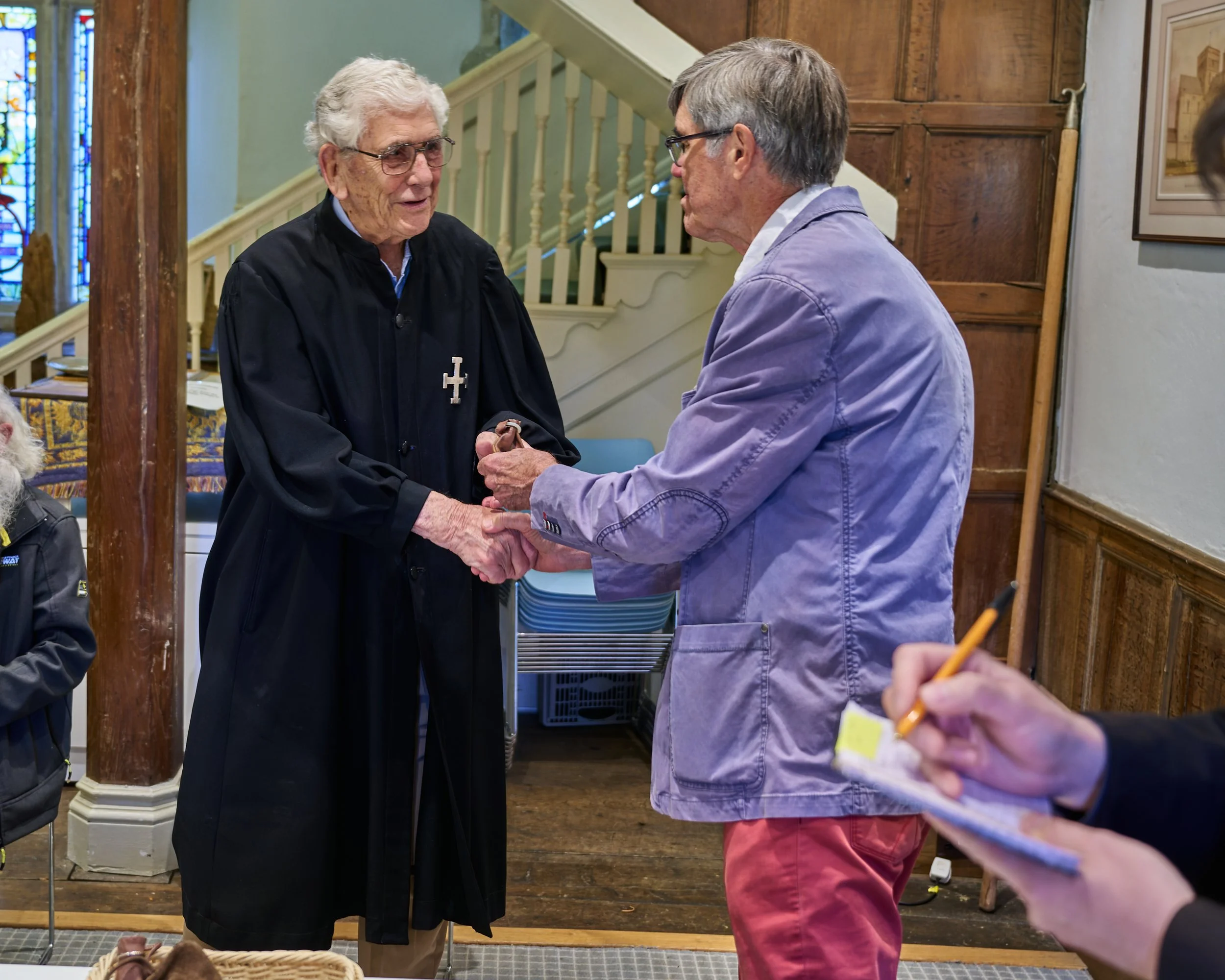
Brothers receive their leather wallet, each containing coins in symbolic continuance of Friday Pay Parade © Martin Urch
Conclusion
The discovery
By the end of my fieldwork, I had stopped looking for survival principally in medieval stone.
Four recurring elements seemed more revealing: name, symbol, ritual and memory.
The name Saint Cross anchors the institution to its Christian origins. The Cross gives that identity visible form. Ritual repeatedly reminds the community how it behaves and what responsibilities it inherits. Have Mynde expresses something deeper still: remember your purpose, your duties and those who came before you.
Saint Cross has certainly changed. The medieval domestic buildings have largely disappeared. New foundations were added. Religious practice evolved. The world beyond its walls transformed almost beyond recognition.
Yet successive generations entered an institution whose purpose was already understood.
That may help explain something that physical survival alone cannot.
Buildings can survive through preservation. Traditions survive through repetition. But institutions endure when successive generations inherit a clear sense of who they are and why they exist.
Saint Cross has done this for almost nine centuries.
Its survival is therefore more interesting than the survival of an exceptionally beautiful medieval church. It represents the transmission of an idea: that community creates obligations, that care should be organised rather than accidental, and that shared ritual can bind one generation to another.
The answer to the question that began my investigation ultimately proved unexpectedly simple.
Saint Cross endured because it never forgot what it was.
Its buildings preserved a setting, but memory preserved the institution. Its symbols reinforced identity. Its rituals renewed purpose. Generation after generation inherited the same story and chose to continue it.
That is why the old motto now seems to me to contain far more than two surviving medieval words.
Have Mynde
Continuity is not simply the preservation of the past.
It is the continual act of remembering.
Experience Saint Cross
Saint Cross is not simply somewhere to learn about medieval history; it is somewhere to encounter its continuity. Walk through its courtyards, enter the church, look for the symbols embedded in its ancient fabric, and consider the generations who have lived within the same charitable tradition. For anyone interested in Britain’s history, I can think of few better places to experience how the medieval past can remain part of the present.
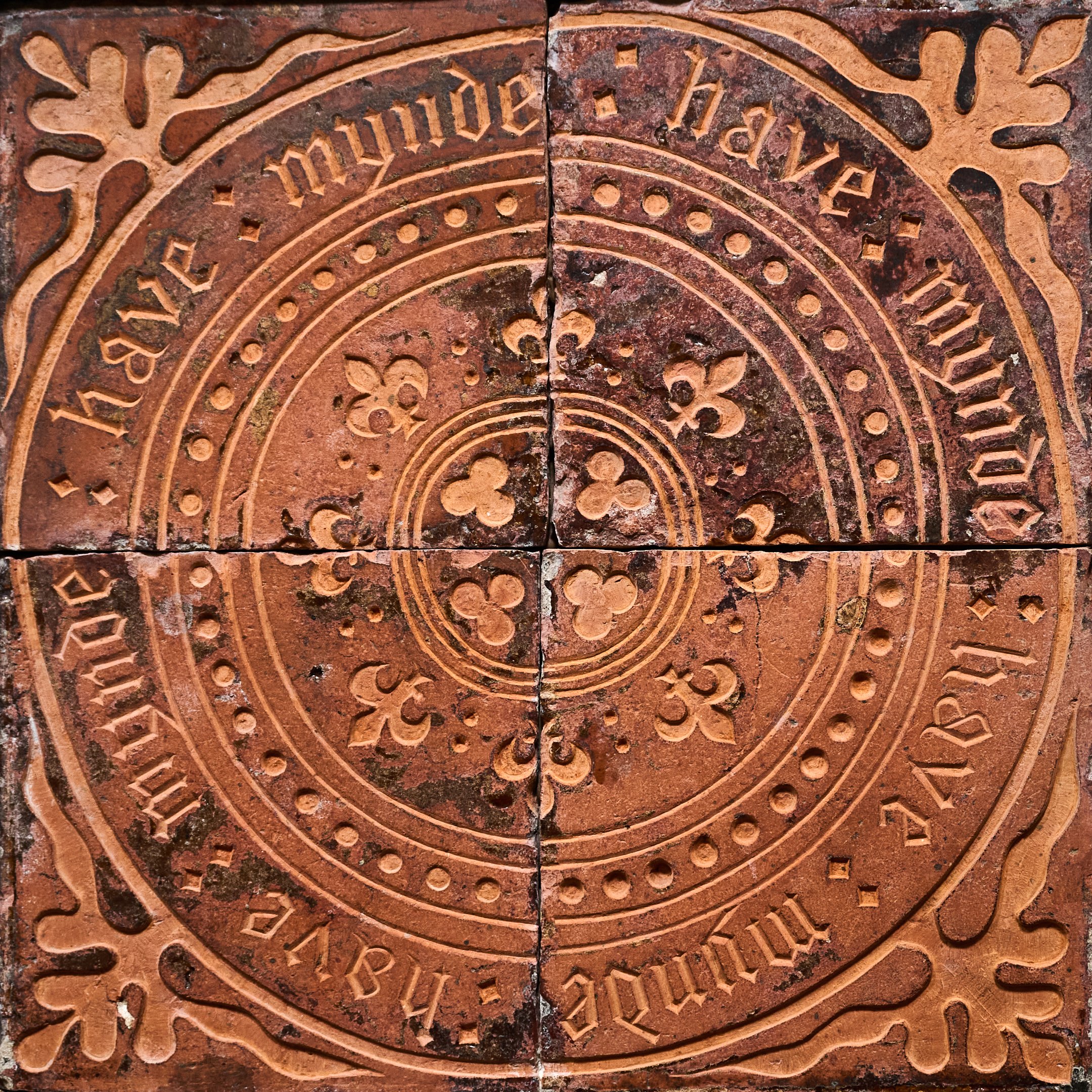
Have Mynde tiles displayed on the North Transept wall of Saint Cross church.© Martin Urch
Sources
The Master and Brothers of Saint Cross
Henry of Blois: New Interpretations — edited by William Kynan-Wilson & John Munns
The Anarchy: The Darkest Days of Medieval England — Teresa Cole
Warrior Monks: Politics and Power in Medieval Britain — Rory MacLellan
Daily Life in a Medieval Monastery — Rose Graham
Saint Cross: England’s Oldest Almshouse — Peter Hopewell
The Hospital of Saint Cross: A facsimile of the 1816 1st Edition Guide — Master Rev. Lewis M Humbert
The Hospital of St. Cross and Almshouse of Noble Poverty — John Crook
Winchester Archaeology Group digs at Saint Cross, 2007-2009, 2013
Hampshire Record Office, Administrative History catalogue for the Hospital of St Cross.
Enquiries
Enquiries regarding book-length collaborations and extended narrative projects, including works developed in partnership with institutions or archive holders, are welcome.
If you enjoy my work, you can even consider throwing a few pennies into the tip jar. Click the ‘buy me a coffee’ button to help fund my research and writing. Until next time…

What next?
Inside Tudor Minds: Faith, Exile, and the Memory That Refused to Die follows one of the most profound ruptures in British history. Henry VIII’s Dissolution of the Monasteries swept away institutions that had shaped communities for centuries, silencing churches, dispersing monks, and reducing great abbeys to ruins. Yet while buildings could be demolished and lands confiscated, ideas proved far harder to destroy. This chapter will explore how a Catholic way of life, rooted in the Rule of Saint Benedict, survived political upheaval through exile, carrying its memory across the English Channel before returning to England centuries later.
My journey continues in search of overlooked continuity. Inside Tudor Minds shows how an institution survived after its apparent extinction, and how its identity endured without the buildings that once defined it. A 1536 narrative history follows medieval sanctuary, monastic exile, Benedictine devotion, and an extraordinary story of return, exploring the resilience of institutional memory itself. Join me for a journey of loss and renewal, discovering how beliefs, values, and traditions outlived the very places that once gave them a home.
Copyright
Martin Urch Photography owns the copyright to all writing and images
Rights & Reuse
Reuse may be considered on a non-exclusive, fully credited basis, with copyright retained.