The destruction of Quarr Abbey—and the faith, ritual and memory that outlived it
This essay is distilled from a chapter of Inside Minds: The Long Memory of Britain, a developing narrative history book that brings Britain’s heritage to life through historical research, original fieldwork, and documentary photography. Each chapter uses immersive storytelling to explore past beliefs, rituals, and institutions and to trace their enduring influence into the present.
In this shorter essay, I focus on the historical question, fieldwork, and evidence that support the central argument emerging from my research into the Tudor and modern Quarr Abbey. I hope it provides an enlightening introduction to the discoveries and ideas that I explore more fully in the book.
Introduction
What survives when an institution is destroyed?
For nearly four centuries, the bells of Quarr Abbey had rung in a land that recognised two supreme authorities. One wore a crown in Westminster. The other wore a tiara in Rome. Kings governed kingdoms; popes governed Christendom. Then Henry VIII changed that relationship by the King’s Reformation.
On 22 July 1536, the suppression of Quarr Abbey took effect. The small Cistercian monastery on the Isle of Wight was caught within a political and religious transformation that would eventually extinguish monastic life throughout England. The community lost its land and possessions. Its monks dispersed. Its buildings were gradually dismantled.
The Dissolution was about far more than reforming monasteries. Henry VIII's assertion of royal supremacy displaced papal authority and brought the English Church beneath the Crown. Thomas Cromwell's administrative reforms extended the Tudor state's reach, while monastic land, wealth and patronage became available for redistribution. At Quarr, an institution founded more than four centuries earlier now existed only for as long as the Crown permitted.
Yet Quarr had been more than a collection of buildings. Founded in 1132 and Cistercian from 1147, its monks lived according to the Rule of Saint Benedict: a disciplined communal life of prayer, work, obedience, charity and silence. By the sixteenth century, the abbey was also woven into the economy and society of the Isle of Wight and the Solent. It managed estates, employed people, offered hospitality and administered its lands. Even Cromwell's commissioners acknowledged its relief of the poor and hospitality to travellers arriving by sea. Suppression therefore removed not simply a religious community, but an institution embedded within the lives of people beyond its walls.
Monastic architecture also reflected this spiritual tradition. Harmonious proportions, geometry and natural light helped create an environment for prayer and contemplation, principles that Dom Paul Bellot would express centuries later in the modern Quarr Abbey.
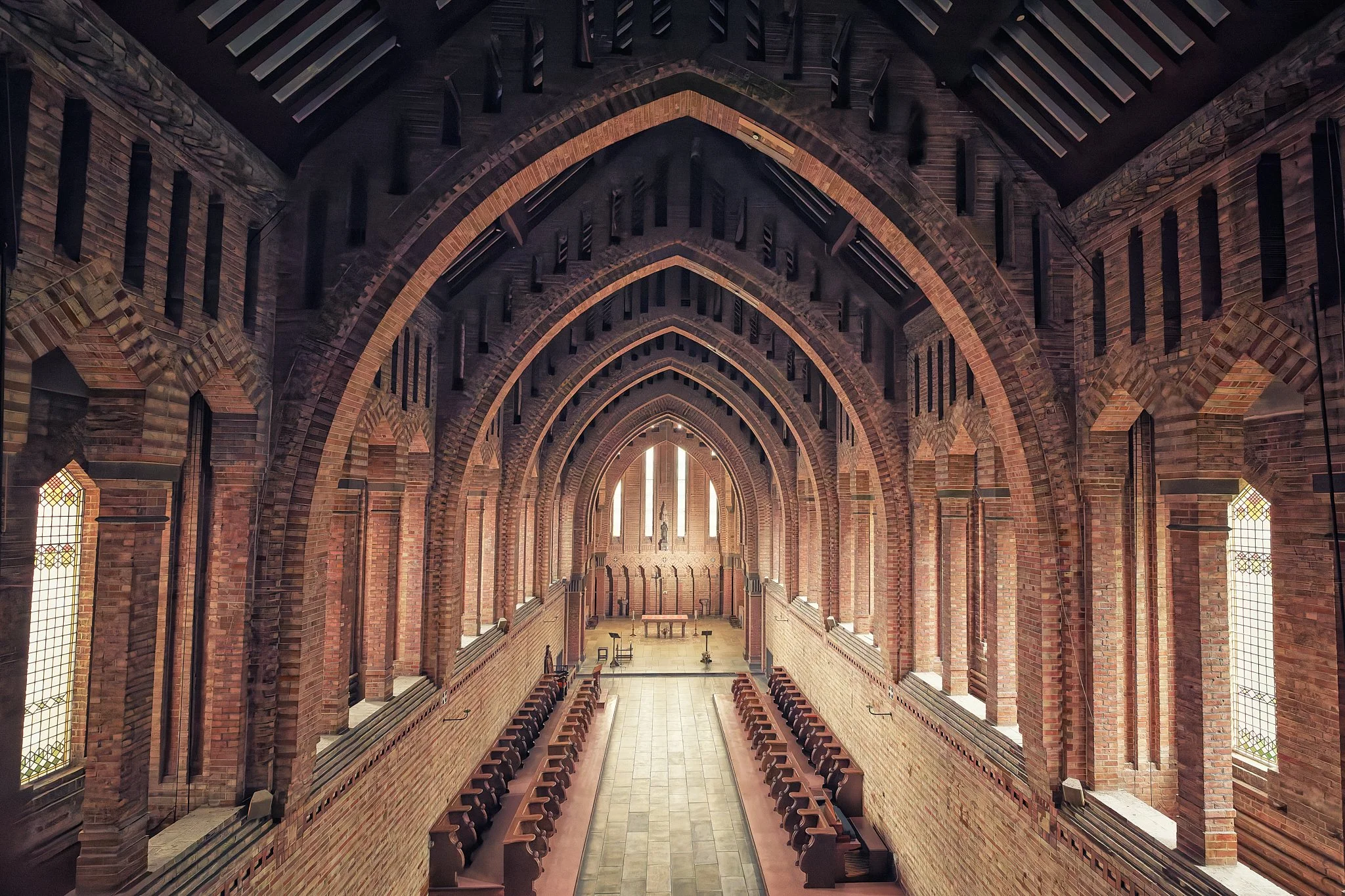
Dom Paul Bellot’s brick arches rise above the choir and sanctuary of modern Quarr Abbey. © Martin Urch
In July 1536, royal commissioners landed at Wootton Haven. They made their way towards Quarr Abbey and effected its suppression. Eight of Quarr's ten priest-monks declared that they wished to continue their monastic lives after suppression, and that detail became increasingly important to my research. The Crown could abolish their monastery, but could it abolish what it meant to be a monk?
The buildings themselves proved less resilient. By 1539 demolition was underway. Stone from Quarr went into Henry VIII's new coastal defences at East and West Cowes, and later to Yarmouth Castle. Masonry that once formed a Cistercian monastery was transformed into fortification. Some survives today.
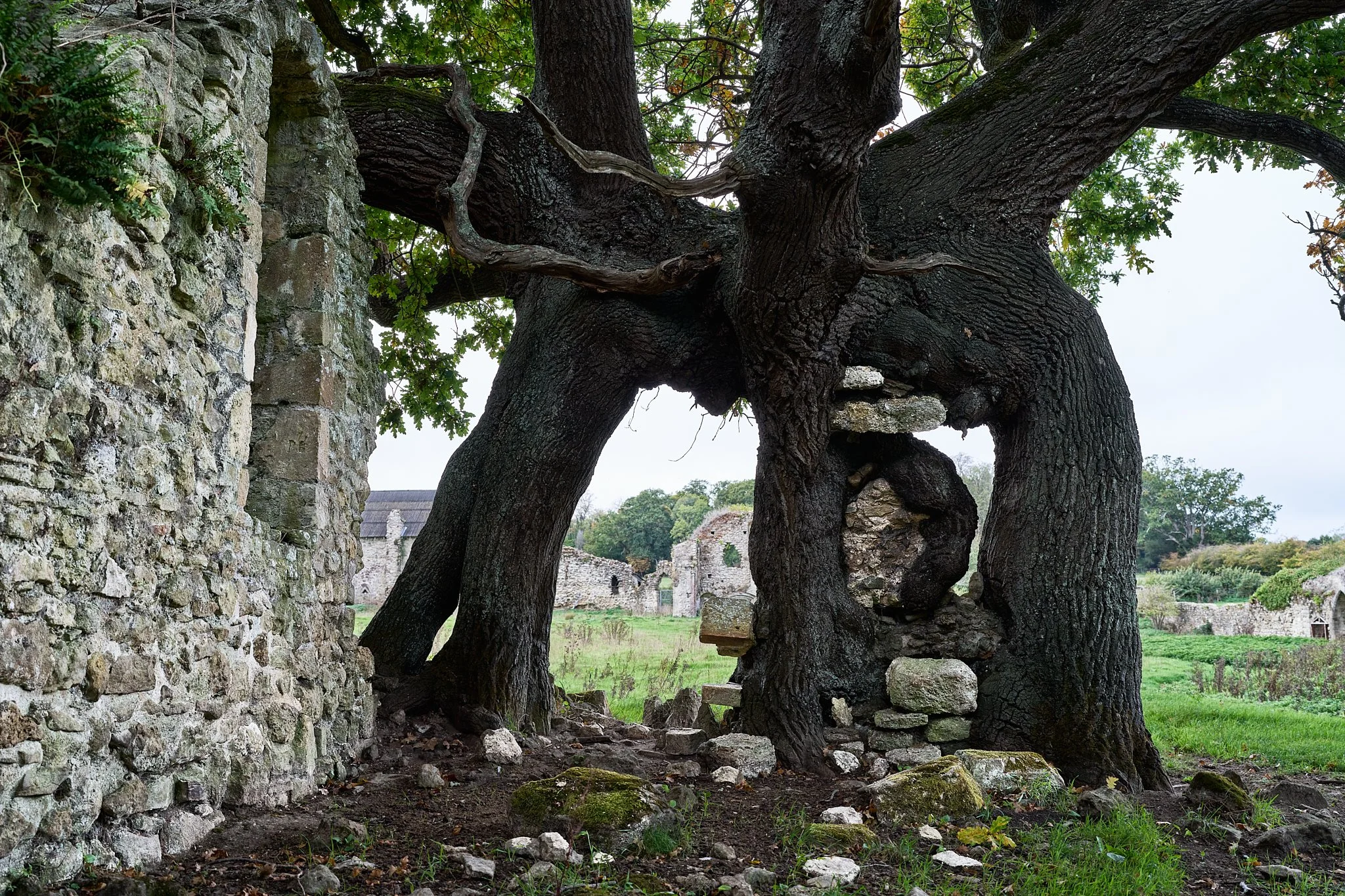
A surviving doorway to the medieval infirmary chapel, where nature has reclaimed the remaining masonry of Quarr's lost monastery. © Martin Urch
But the monks carried something away that could not be listed in an inventory: knowledge of how to live a Benedictine life. Prayer, liturgy, obedience, community and the Rule could survive without Quarr's stone.
Fieldwork
Understanding Quarr required several visits. Over four months, I immersed myself in the Cistercian world, returned repeatedly to the abbey, and gradually built relationships and trust with its Benedictine community. Each visit brought new insights, challenging and refining my understanding of what had survived.
The monks were very helpful and participatory in my research. Yet they are understandably private people and did not want to be photographed in the way I would normally document people in an Inside Minds chapter. So the photography evolved with the research. Instead of intruding on their privacy, I began exploring alternative ways to capture continuity through architecture, landscapes, surviving medieval fabric, and the physical relationship between the ruined Cistercian abbey and the living Benedictine monastery beside it.
My photographic approach was guided by a gained understanding of monastic architecture. Dom Paul Bellot designed the modern abbey around geometry, proportion, and natural light, principles expressed throughout its buildings, most dramatically in the church. I sought to capture how these elements create harmony and tranquillity, while the arches and changing light draw the eye towards the sanctuary and altar. These were not simply architectural details, but expressions of a spiritual tradition shared with the medieval Cistercians, despite the centuries separating their two monasteries.
Returning on the anniversary
On 22 July 2026, exactly 490 years after the suppression took effect, I travelled to Quarr for the 9 a.m. conventual Mass. It was the feast day of Saint Mary Magdalene.
Crossing the Solent from Portsmouth gave the journey an unexpected historical resonance. Southsea Castle (built by Henry VIII in 1544) appeared on the shoreline. Nearly five centuries earlier, royal authority had crossed this same stretch of water to extinguish Quarr. I was crossing it in search of what that authority had failed to destroy.
At modern Quarr, Oxford Sandy and Black pigs rooted in pens as I entered the grounds. Beyond them stood Dom Paul Bellot's extraordinary twentieth-century monastery: red brick rather than medieval stone, unmistakably modern, yet built to serve a recognisably Benedictine life.
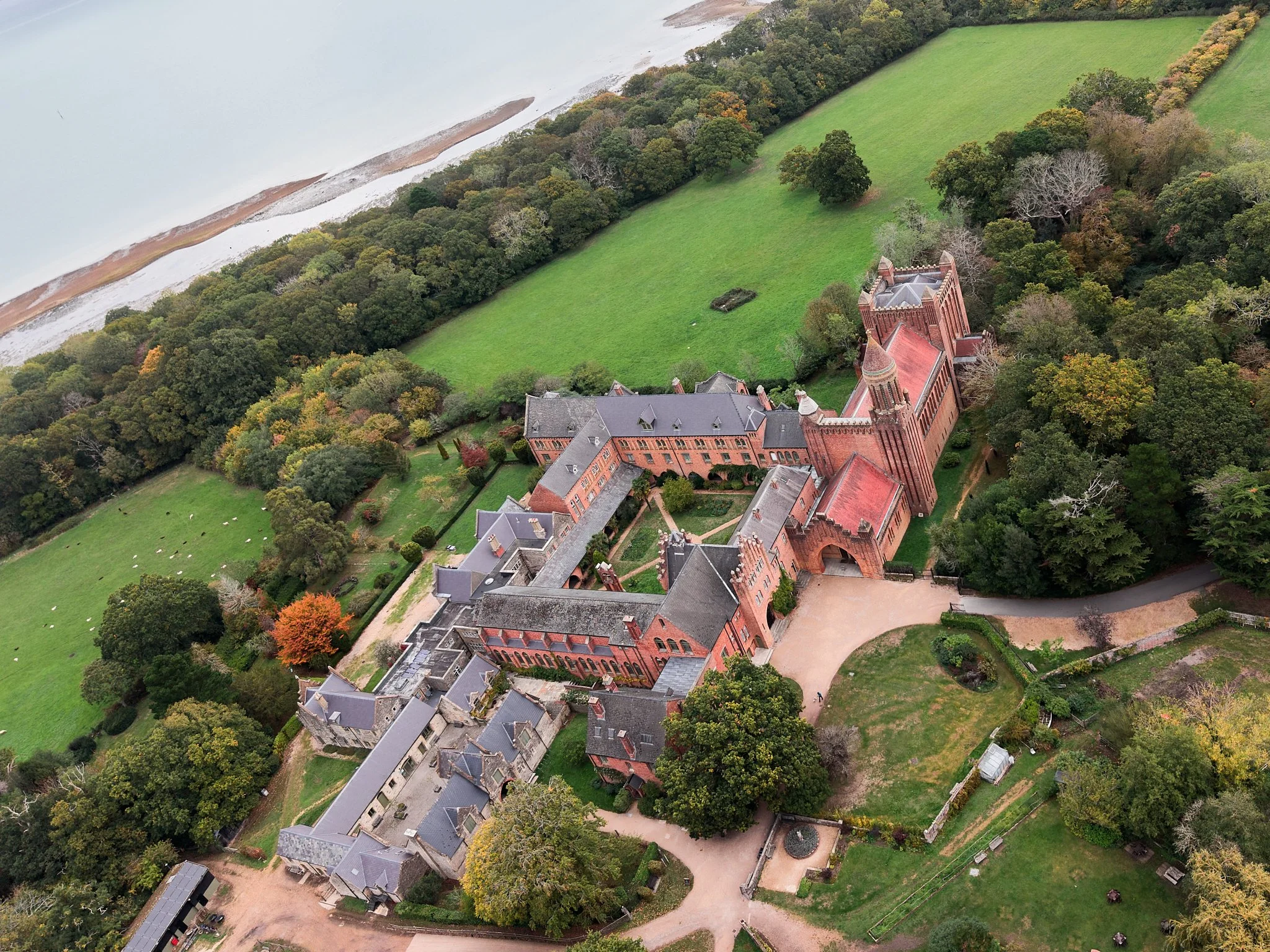
The modern Benedictine monastery, its surrounding landscape and the Solent, which connects Quarr to the mainland. © Martin Urch
Inside the church, the Mass began. Spoken and sung prayer alternated with readings, silence, movement and stillness. Then came something I had not expected. During the prayers, the community remembered its dead:
“We remember especially the deceased monks of medieval Quarr Abbey.”
The words were brief, but they changed how I understood the morning.
The monks suppressed in 1536 were not being commemorated as historical figures for visitors. They were being remembered within the ordinary prayer of a living monastic community. The medieval monastery had disappeared, but its dead still belonged within Quarr's memory.
Monastic life moves between walls
The modern community has no direct institutional descent from medieval Quarr. Instead, it traces its origins to Benedictine monks of Solesmes, driven into exile from France at the beginning of the twentieth century.
Their first home on the Isle of Wight was Appuldurcombe House—another place with a medieval Benedictine history. Around 1100, Richard de Redvers had given Appuldurcombe manor to the Benedictine Abbey of Montebourg in Normandy. When the Solesmes community later moved to Quarr in 1907–08, they even carried their temporary Appuldurcombe wooden church with them.
Monastic life had moved once more from one set of walls to another.
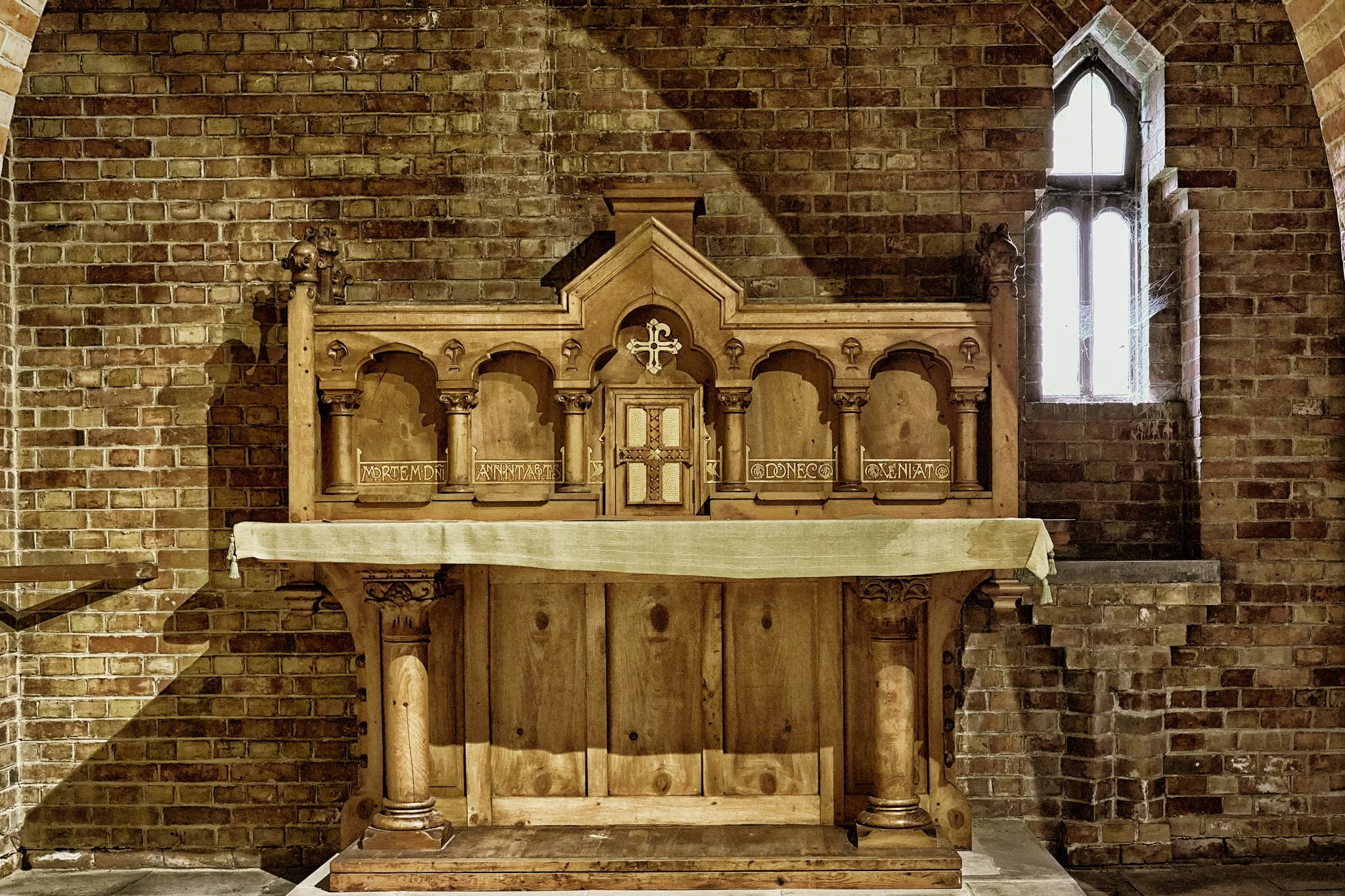
The exiled Benedictines brought the altar of Saint Paul from their temporary church at Appuldurcombe to Quarr Abbey. © Martin Urch
Abbot, Rule and Community
I returned on 28 August to meet Father Brian Kelly, Quarr's archivist, and Professor David Tomalin, an archaeologist who has worked extensively on the medieval abbey.
I had been wondering what a medieval monk would recognise at modern Quarr. Father Brian's answer made me realise that I was looking for continuity too literally.
Much has changed. Services are shorter. Latin is no longer used exclusively. The night office no longer interrupts sleep. The modern monastery has adapted to circumstances its medieval predecessors could never have imagined.
Yet Father Brian identified three essentials: Abbot, Rule and Community.
Prayer still orders the day. The Rule of Saint Benedict still provides a framework for life. Monks still live together under an abbot within a community formed around a shared religious calling. Continuity does not require every practice to remain unchanged.
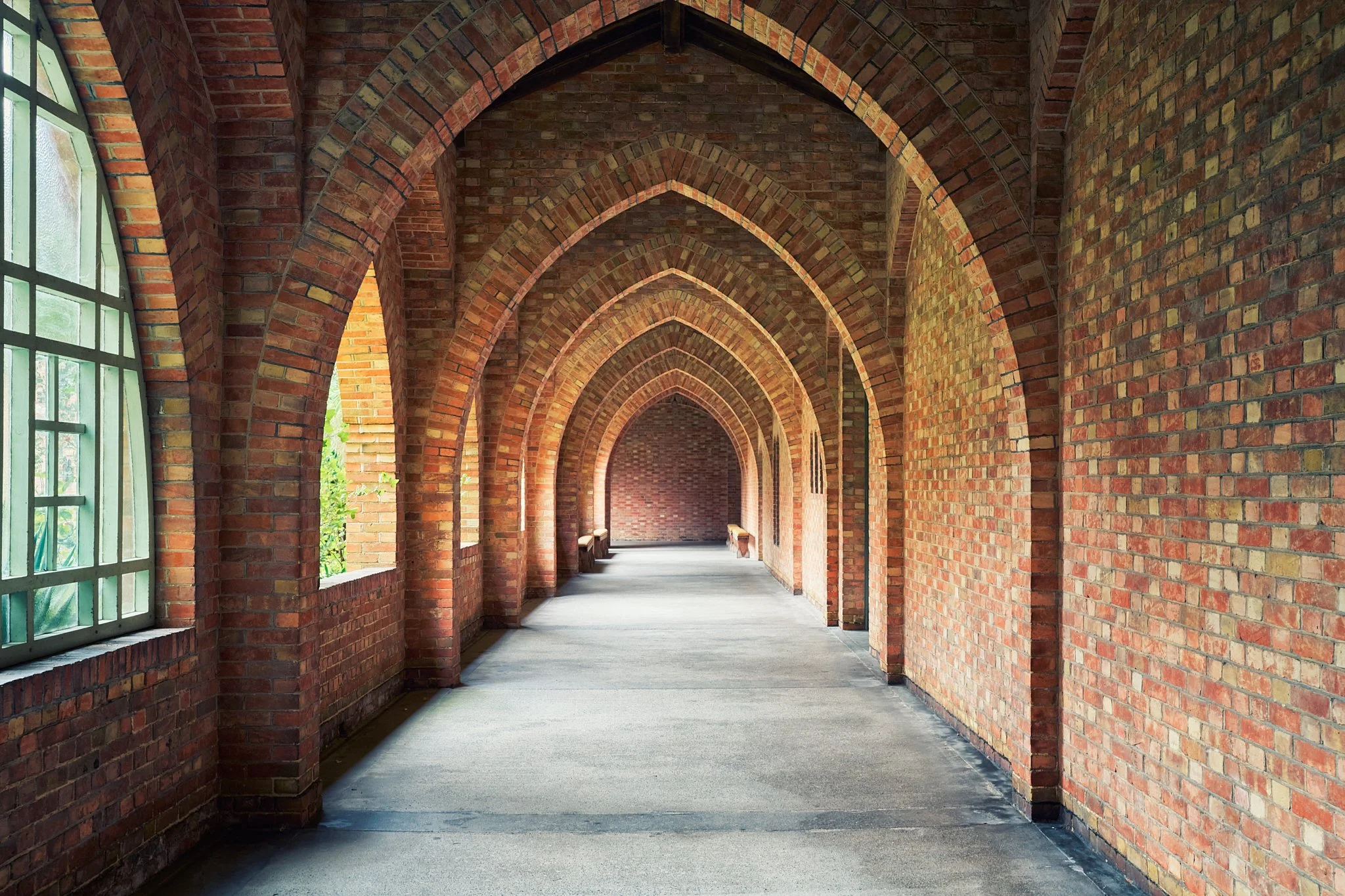
The cloister of modern Quarr, where Bellot's architecture organises communal life around the church.
© Martin Urch
Architecture offered another connection. Medieval Quarr centred on the church and cloister, with the latter providing connecting passages to the monastic buildings. Bellot did not reproduce the medieval monastery, but the church and cloister once again structured communal life at modern Quarr.
These connections revealed what had endured. But they could not undo what had been lost.
Conclusion
Distressing loss to communities
None of this should romanticise what happened in 1536.
Medieval Quarr was abolished. Its community was broken apart. Its buildings were dismantled; priceless monastic libraries were dispersed; and its economic and charitable relationships ended. Across England and Wales, the suppression of more than eight hundred religious houses transformed familiar landscapes.
In the autumn of 1536, resistance erupted in the Lincolnshire Rising and the Pilgrimage of Grace. There was no rising to save Quarr. Its monks surrendered. Yet its suppression was part of the same transformation that others recognised clearly enough to risk their lives.
Isle of Wight inhabitants did not rebel.
That does not mean the loss went unfelt.
What the Dissolution could not confiscate
But by the end of my fieldwork, I had stopped looking for Quarr's survival principally in stone. What endured was more portable: Rule, practice, community and memory.
The Rule could travel without property. Practices could be repeated within different walls. Community could form again around an abbot. Memory could connect people living that life with those who had lived it centuries earlier.
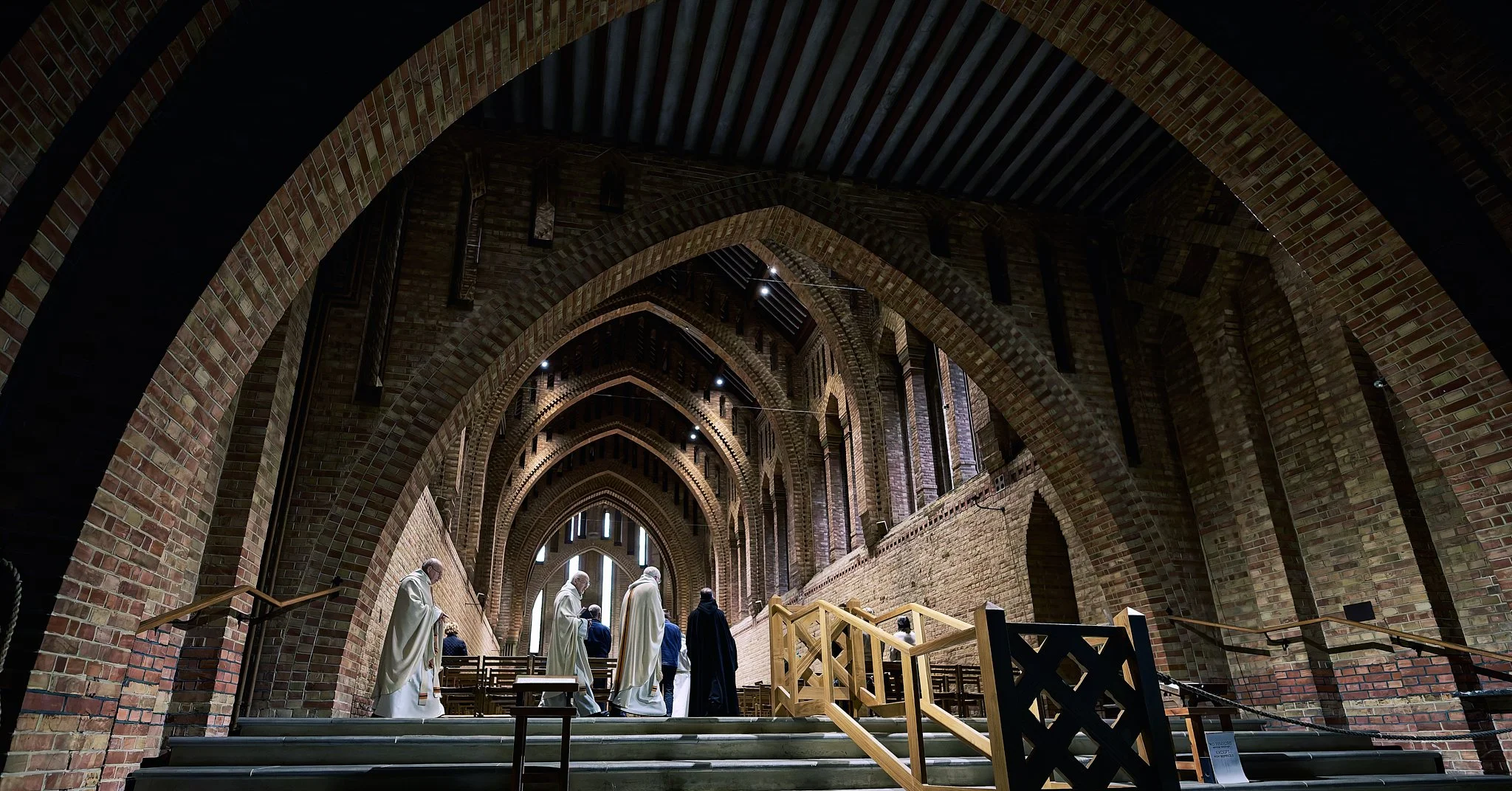
The Living Community: Monks enter the abbey church for Mass, continuing a tradition of communal worship governed by the Rule of Saint Benedict. © Martin Urch
Henry VIII's government demonstrated the extraordinary reach of Tudor power. It could change the law, seize land, extinguish a monastery's legal existence and reduce its buildings to reusable stone.
But power had limits. It could abolish an institution without necessarily abolishing the habits of mind that institution had formed.
Nearly four centuries later, Benedictine monks returned to the Isle of Wight. Exactly 490 years after medieval Quarr was suppressed, I sat inside another abbey church on the same estate. The buildings were different. The community belonged to another foundation and a different history. Yet monks still lived under an abbot and the Rule of Saint Benedict. Their day was still ordered around prayer, work, reading and silence.
And during their prayer, the dead monks of medieval Quarr were still named.
The Crown had extinguished medieval Quarr in law. It had taken down its walls stone by stone. But the loss had not been permitted to become nothing.
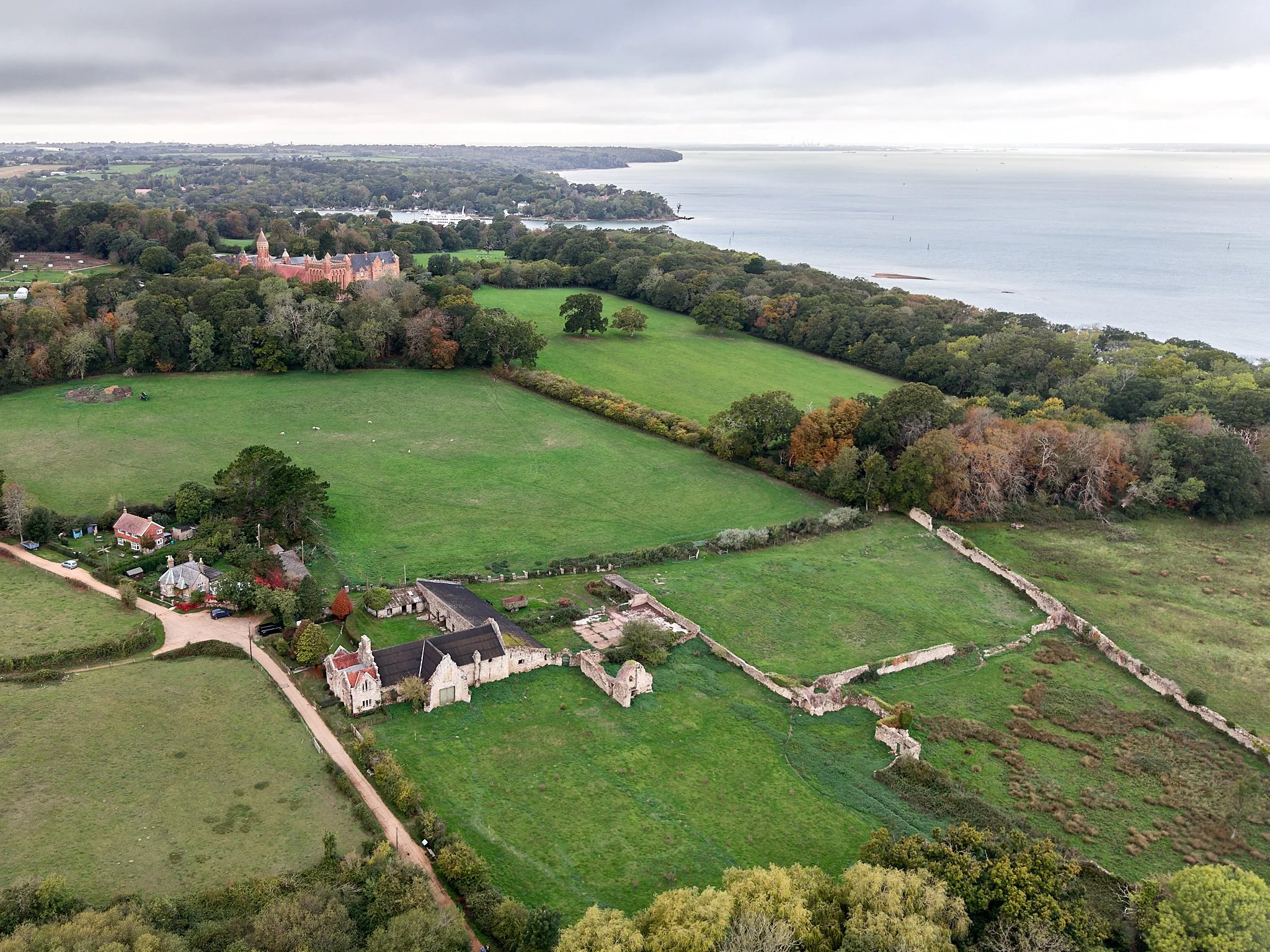
Two Abbeys, One Tradition: The ruins of medieval Cistercian Quarr in the foreground, with the modern Benedictine monastery beyond. Memory has outlasted the confiscation © Martin Urch
Experience Quarr Abbey
Quarr is unusual because medieval and modern monastic landscapes meet in the same place. The surviving medieval remains lie close to the twentieth-century Benedictine abbey, whose church and publicly accessible grounds let visitors experience Quarr as a living monastery rather than solely as an archaeological site.
For me, that coexistence is what makes Quarr particularly revealing. The ruins show what political power could destroy. The nearby monastery shows that buildings are only one way institutions endure.
Walk between them, and almost five centuries of absence become remarkably short.
Principal Sources
S. F. Hockey, Quarr Abbey and Its Lands, 1132–1631. Leicester University Press.
Luke Bell OSB, A Deep and Subtle Joy: Life at Quarr Abbey. Hidden Spring.
The Rule of Saint Benedict, translated by Carolinne White. Penguin Classics.
Letters and Papers, Foreign and Domestic, Henry VIII, Vol. X, no. 1156; Vol. XII, Part I, no. 1022.
The National Archives, SP 1/119, fols. 7–7v.
G. W. Bernard, The King’s Reformation: Henry VIII and the Remaking of the English Church. Yale University Press.
David Knowles, The Religious Orders in England, Vol. III: The Tudor Age. Cambridge University Press.
Percy G. Stone, The Architectural Antiquities of the Isle of Wight. Privately published.
Shannon McSheffrey, Seeking Sanctuary: Crime, Mercy, and Politics in English Courts, 1400–1550. Oxford University Press.
Roberta Gilchrist, “Monastic Legacies: Memory and the Biography of Place,” in Sacred Heritage: Monastic Archaeology, Identities, Beliefs. Cambridge University Press.
Enquiries
Enquiries regarding book-length collaborations and extended narrative projects, including works developed in partnership with institutions or archive holders, are welcome.
If you enjoy my work, you can even consider throwing a few pennies into the tip jar. Click the ‘buy me a coffee’ button to help fund my research and writing. Until next time…

What next
Next, we leave Quarr Abbey for Abbots Bromley, where Saint Bartholomew’s Fair was recorded in 1226. Fairs brought people together to trade, earn a living and exchange news, connecting village life to the wider medieval economy. Eight centuries later, the village still gathers for an extraordinary tradition: the Abbots Bromley Horn Dance, performed with ancient reindeer antlers whose origins remain mysterious.
In the next Inside Medieval Minds, we’ll explore the fair's history and follow the dance through the Bentley-to-Fowell family inheritance, church ritual, and the tradition still performed today. We’ll ask how people made a living in medieval England, what survives when written evidence falls silent—and whether a community can keep remembering something long after it has forgotten how it began.
Copyright
Martin Urch Photography owns the copyright to all writing and images
Rights & Reuse
Reuse may be considered on a non-exclusive, fully credited basis, with copyright retained.