Inside Neolithic Minds Essay: Walking with Britain’s First Farmers
Life, family, belief, and the enduring importance of places
This essay is distilled from a chapter of Inside Minds: The Long Memory of Britain, a developing narrative history book bringing Britain’s heritage to life through historical research, original fieldwork, and documentary photography. Each chapter uses immersive storytelling to explore past beliefs, rituals, and institutions and to trace their enduring influence into the present.
In this shorter essay, I focus on the historical question, fieldwork, and evidence to present the central argument emerging from my research into Neolithic life at Avebury. I hope it provides an enlightening introduction to the discoveries and ideas that I explore more fully in the book.
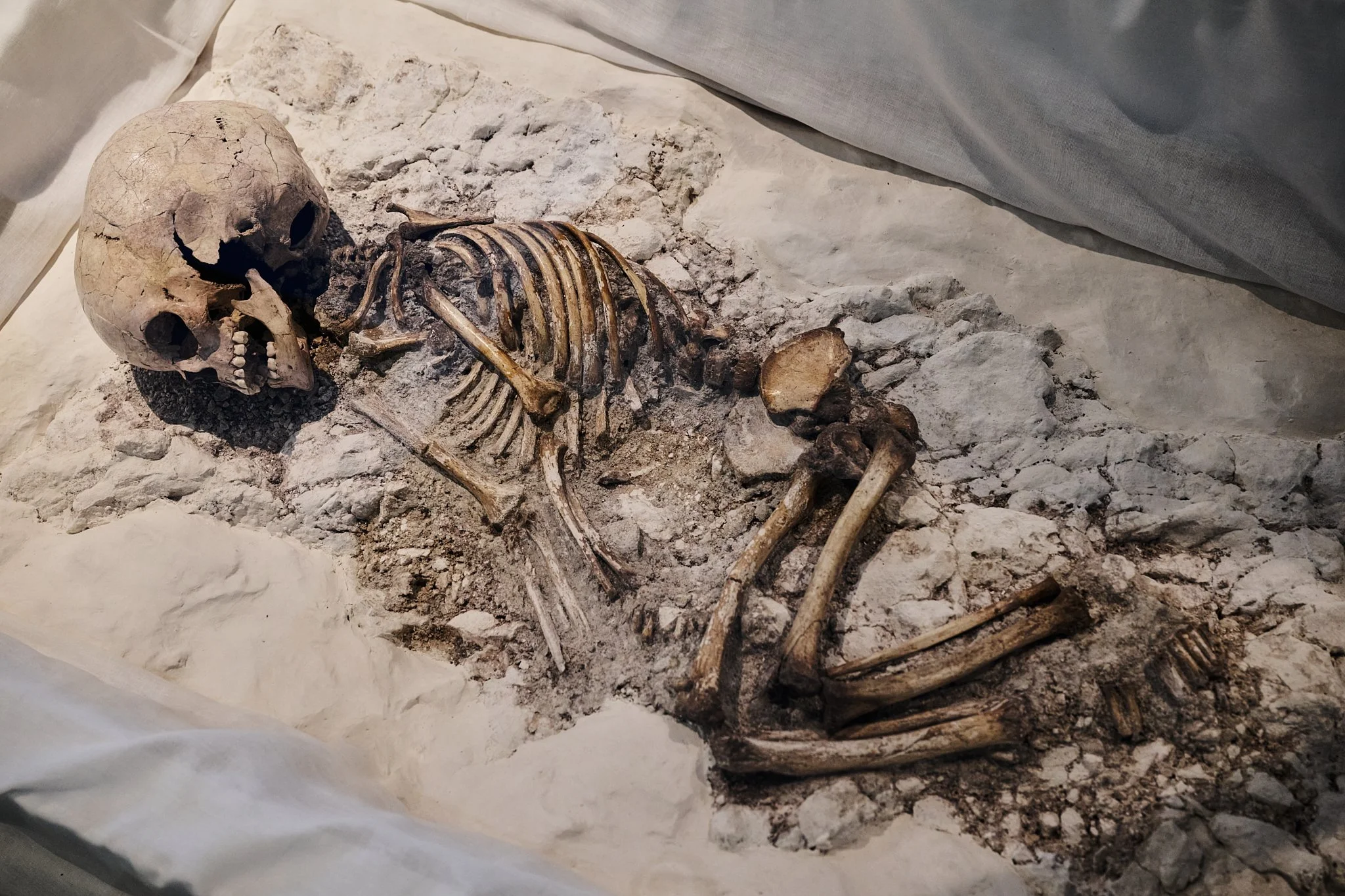
3350 BC Neolithic Child Skeleton | Alexander Keiller Museum, Avebury. Photo © Martin Urch
Introduction
The Neolithic world was not primitive—it was planned, organised, and deeply connected to the land and the seasons. Come with me to Avebury, where fieldwork, voices, and landscapes reveal farmers, builders, and traders whose lives feel unexpectedly modern.
Six thousand years ago, Britain began to change.
Communities that had depended upon hunting animals and gathering wild plants increasingly adopted agriculture, domesticating plants and animals and putting down roots in the landscape. Farming transformed not simply how people obtained food, but how they lived together.
Fixed settlement brought new relationships with land, property and community. Families built homes. Crops had to be planted and harvested. Animals needed protection and pasture. Seed had to be stored. Seasonal change became something to observe, remember and anticipate.
This was not the primitive world suggested by the old stereotype of Stone Age “cavemen”.
Britain’s Neolithic communities built timber houses with wattle-and-daub walls. They mined flint, traded materials across considerable distances, organised communal labour and constructed some of the most extraordinary monuments ever created in Britain.
At Avebury, between approximately 2600 and 2400 BC, generations transformed the Wiltshire landscape with a vast henge and stone circles. Enormous sarsens were moved from the Marlborough Downs. A huge ditch was excavated. Banks were raised and stones positioned within a monumental design requiring organisation, cooperation and knowledge accumulated across generations.
These people left no written explanation of what Avebury meant to them.
Yet they deliberately created places capable of outliving their builders by thousands of years.
That raises a question at the heart of my research.
What changed when Britain’s first farmers stopped moving through the landscape and began to belong to particular places?.
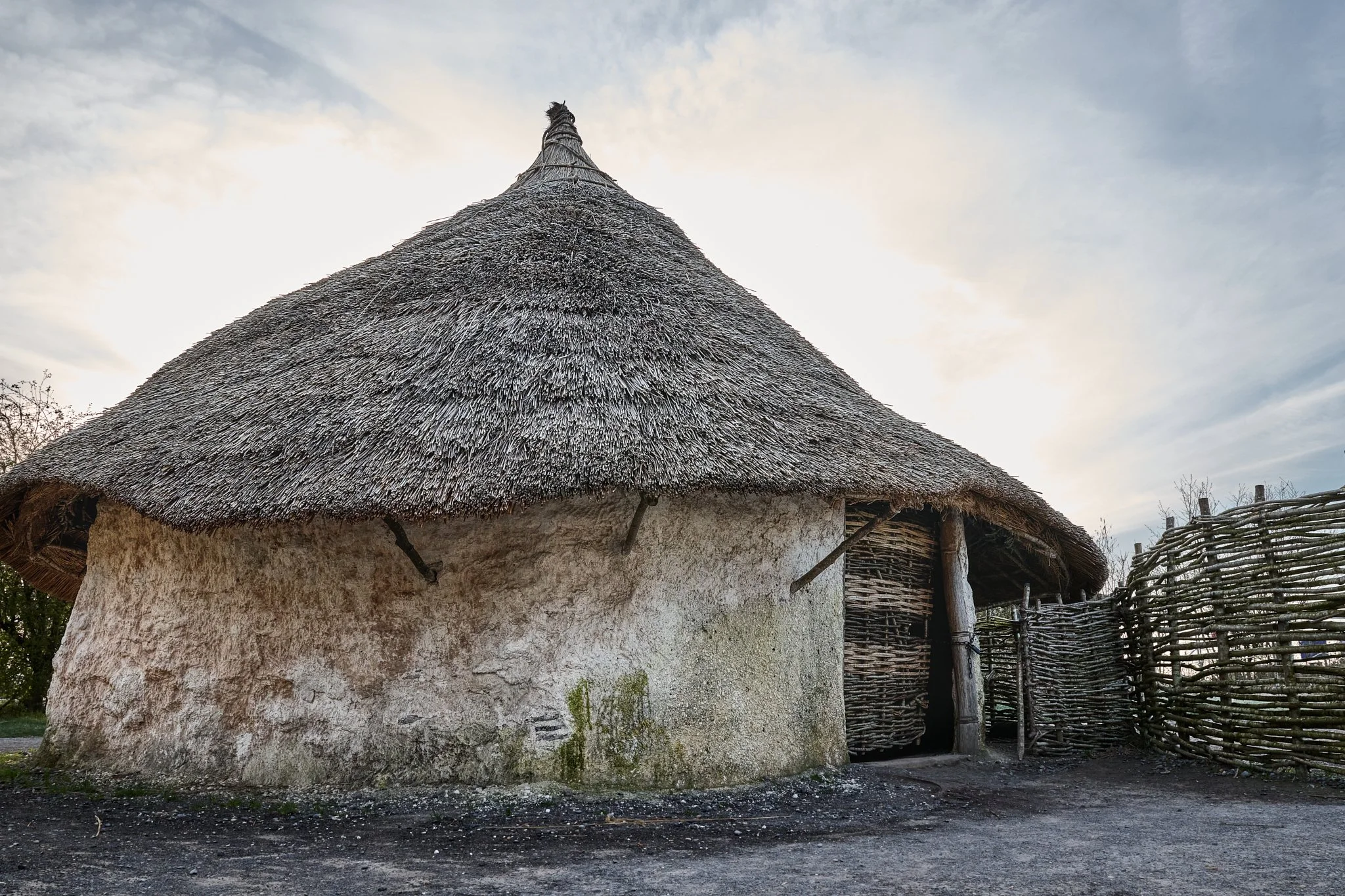
Neolithic Home in the Stonehenge Museum. Photo © Martin Urch to
Fieldwork
Looking beyond the stones
I visited Avebury Henge on the 2026 Spring Equilux and, three days later, travelled sixteen miles across the Wiltshire chalk landscape to Stonehenge for the Spring Equinox.
I had come to explore monumental architecture, but the question increasingly became one of human behaviour.
What did permanent settlement require of the people who lived here?
Farming demanded planning. The timing of planting, harvest and livestock births mattered. Knowledge of weather and seasonal cycles had to be remembered and passed between generations. Maintaining homes, fields and animals required repeated labour. Larger communal projects demanded cooperation extending beyond individual households.
Avebury magnifies those behaviours until they become visible in the landscape.
Its stones speak not only of belief, but of organisation.
Moving sarsens weighing many tonnes, excavating the great ditch, raising banks and feeding the people undertaking that work required decisions, coordination and shared purpose. Whatever precise cosmological or religious meanings the builders attached to their monument, its construction could not have been the achievement of isolated individuals.
The deeper I looked, the less alien these people appeared.
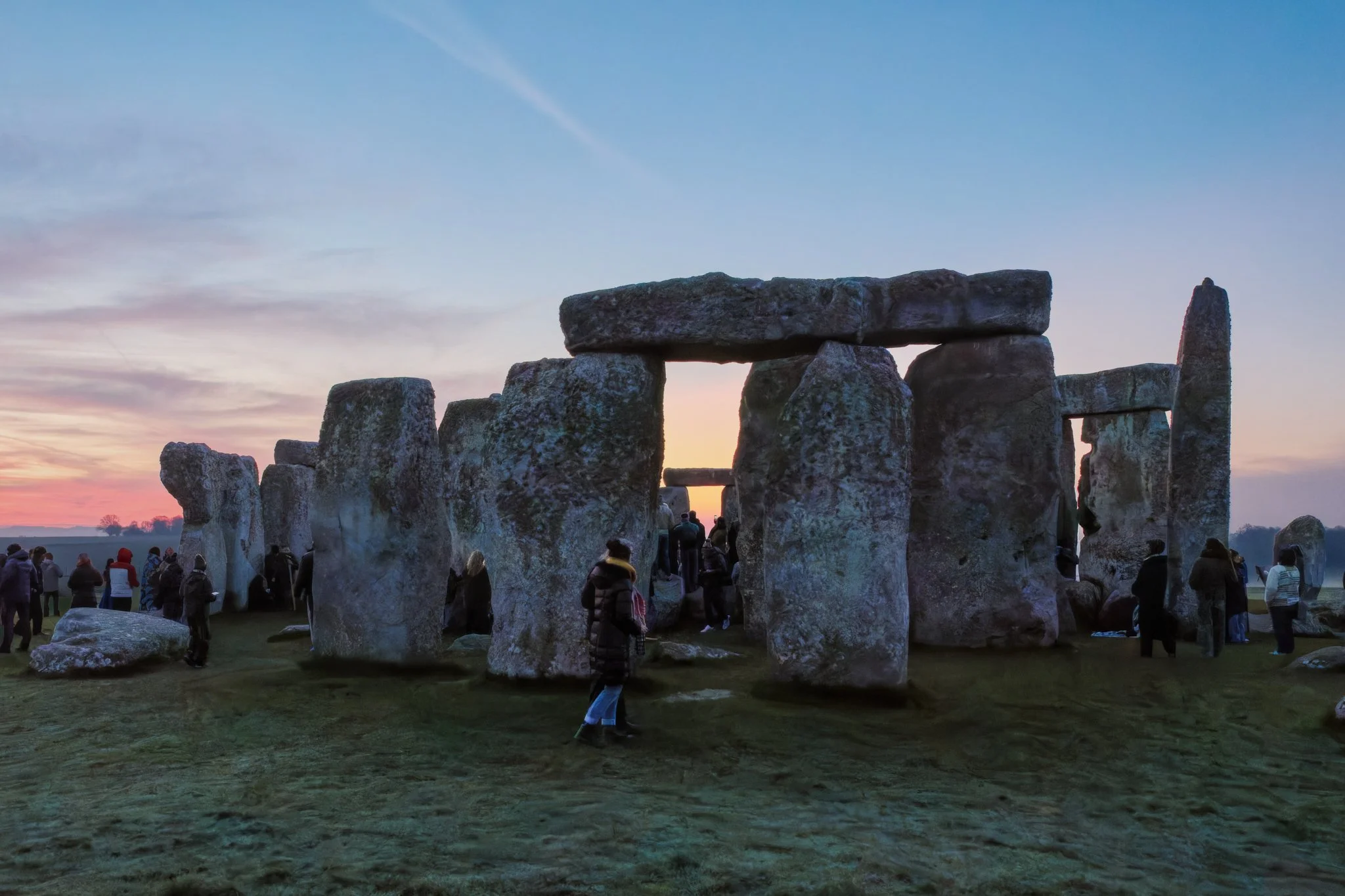
Entering Stonehenge Stone Circle for the Spring Equinox © Martin Urch
Living by the seasons
Seasonal awareness would have been fundamental to Neolithic farming.
For people dependent upon crops and livestock, the annual cycle was not an abstraction. Plant too early and frost could destroy vulnerable growth. Plant too late and crops might not ripen before autumn weather returned. Animals gave birth according to their own seasonal rhythms. Stored food had to last until the landscape became productive again.
Watching the sun rise across this landscape around the Spring Equilux and Equinox made that relationship easier to understand.
The monumental landscapes of Avebury and Stonehenge demonstrate that Neolithic communities paid close attention to place, horizon and celestial movement. The precise meanings they assigned to particular monuments remain debated, but the wider relationship between seasonal observation, gathering and monumental construction is impossible to ignore.
Standing among the stones, the familiar division between practical life and belief also begins to look artificial.
For a farming community, the return of longer days was practical. It was also psychological. The seasons governed food, fertility, work, gathering and survival.
The landscape itself became a way of experiencing time.
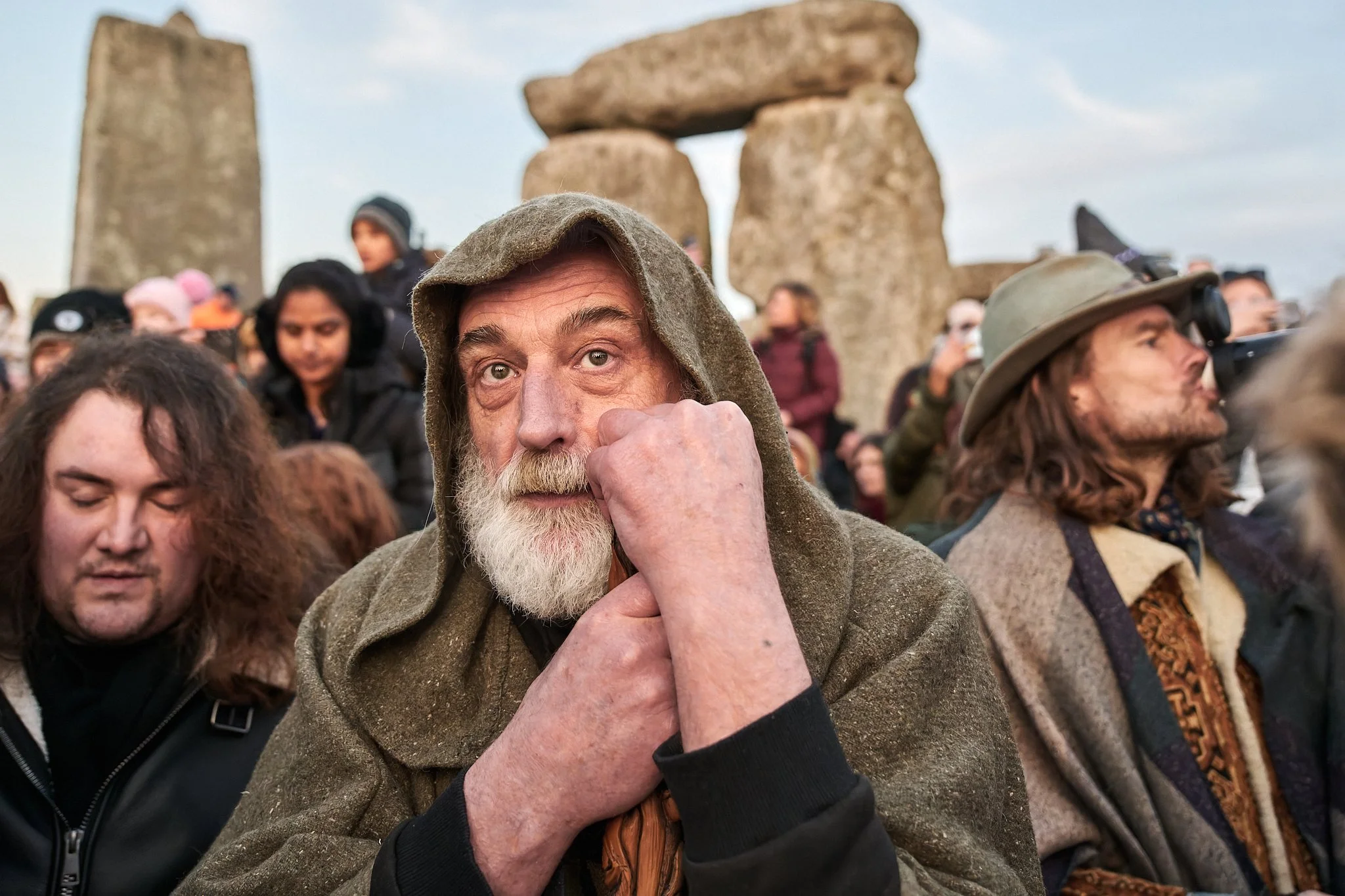
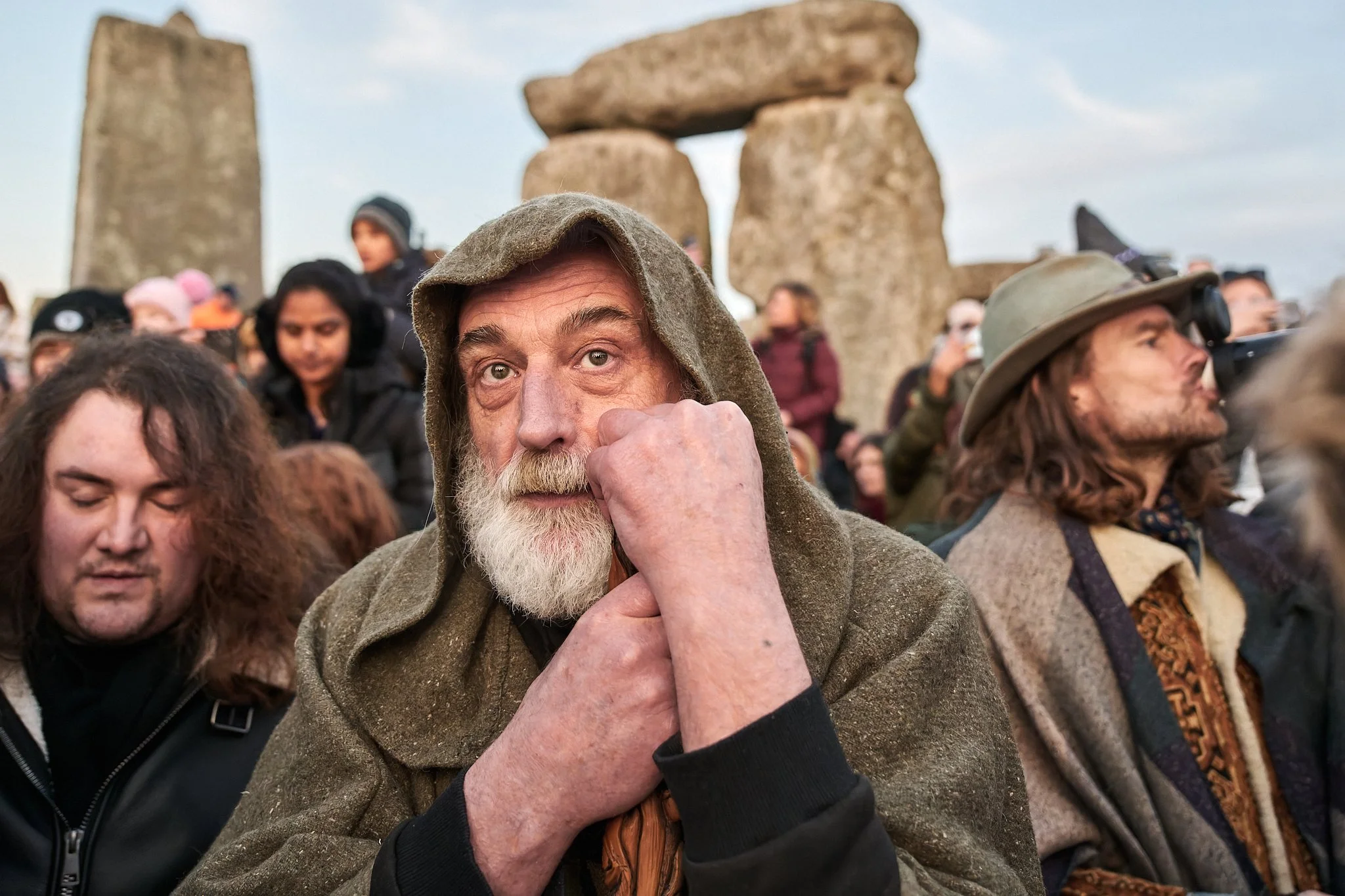
Druid Contemplation at the Spring Equinox © Martin Urch
Ancient places, new meanings
The people gathering among these monuments today belong to an entirely different world.
At Avebury and Stonehenge, I spoke with modern Druids observing the Equilux and Equinox. Their rituals honour ideas including cosmology, fertility, the natural world, the four directions and the elements of earth, air, fire and water.
It would be tempting to draw a straight line backwards from those modern practices to the people who raised the stones.
The evidence does not allow us to do that.
Iron Age Druids appeared roughly two to two-and-a-half millennia after Avebury Henge was built. They themselves encountered monuments of deep antiquity, and archaeological evidence suggests that later communities revisited, reused, and reinterpreted ancient places.
Modern Druidry represents another reinterpretation.
Yet that process is itself revealing.
Generation after generation has encountered these monuments and found reason to gather around them, attach meaning to them and incorporate them into new understandings of landscape, season and belief.
The ideas change.
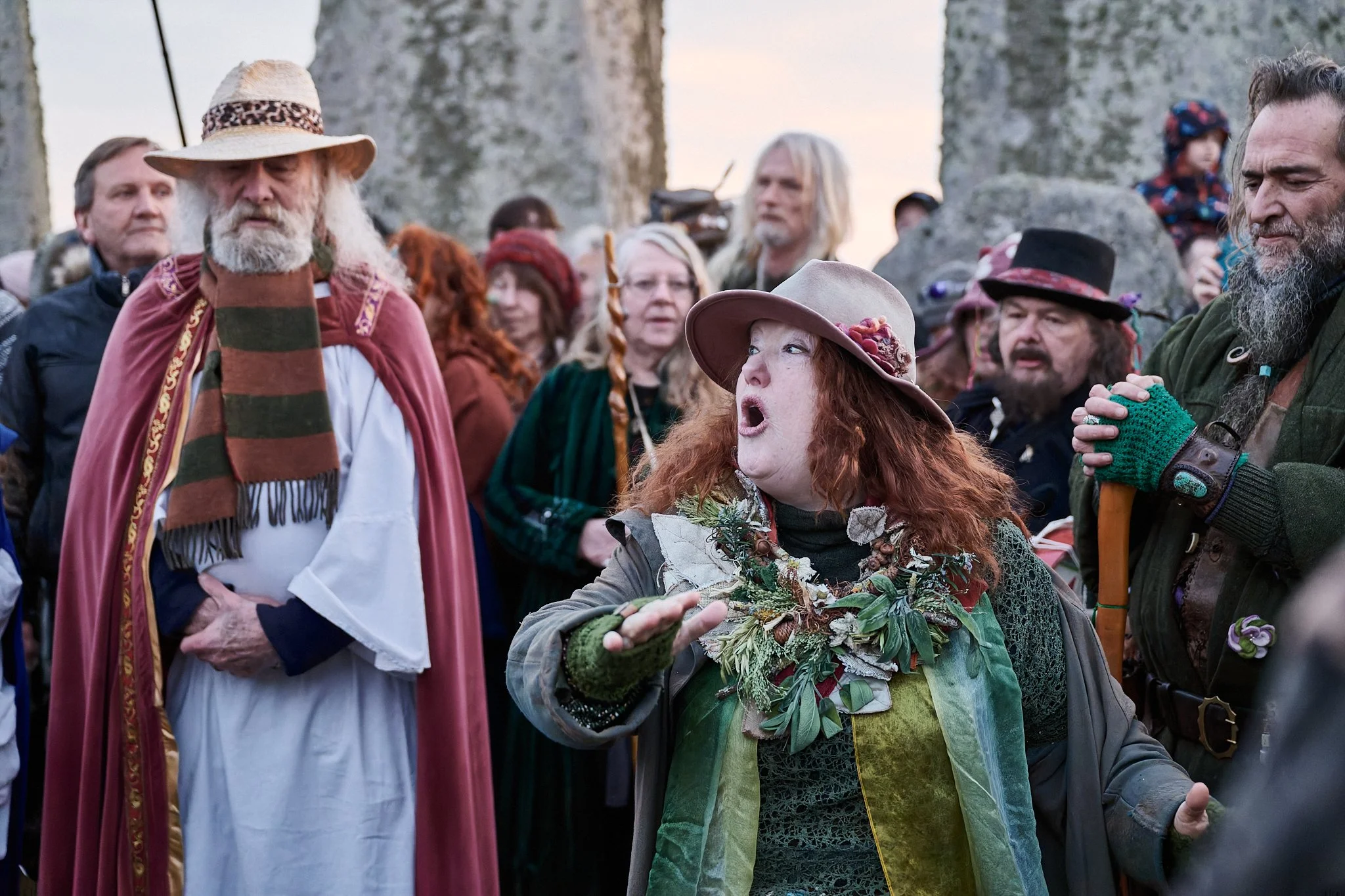
Druid storyteller at the Spring Equinox, Stonehenge © Martin Urch
Conclusion
The discovery
My research began with Britain’s first farmers.
It ended with something broader: the consequences of putting down roots.
The transition to farming transformed people’s relationship with the landscape. Land was no longer simply territory through which communities moved in search of food. It became somewhere into which generations invested labour.
Fields were cleared. Houses were built. Animals were enclosed. Crops were planted. Neighbours became essential to shared labour and survival.
And eventually, monuments rose.
Avebury represents this relationship with place on an extraordinary scale.
Its builders committed immense effort to creating something whose lifespan would extend far beyond their own. The henge and stones required cooperation, accumulated knowledge and the ability to organise people around a shared objective.
They also created memory in physical form.
A house might disappear. A wooden fence would rot. Crops would be harvested and replanted.
A great stone remained.
That may be one of the most important consequences of the Neolithic transformation. Permanent settlement allowed communities not only to inhabit landscapes, but to invest them with accumulated meaning.
Those meanings did not remain fixed. Later peoples encountered the monuments and interpreted them afresh. Iron Age communities inherited places already ancient. Medieval communities created their own explanations. Antiquarians investigated them. Archaeologists excavated them. Modern Druids gather among them at seasonal turning points. Visitors travel from across the world simply to stand within their presence.
The people who built Avebury could never have imagined any of this.
Yet their decision to alter the landscape permanently made it possible.
The Neolithic world, therefore, feels less remote when viewed through the lens of everyday human behaviour. These were people establishing homes, raising families, sharing work, exchanging materials, observing seasons and creating places that expressed collective purpose.
Many of those behaviours remain fundamental to how we organise our own lives.
We still build communities around shared places. We still mark important moments collectively. We still invest buildings and landscapes with identity. And we still create monuments because some ideas seem too important to exist only within human memory.
The central discovery of my research was therefore not simply that Neolithic society was more sophisticated than the familiar stereotype suggests.
It was that settlement changed memory.
Britain’s first farmers put down roots in the land, and in doing so began creating places through which communities could remember themselves.
Neolithic villages anchored people to place.
Their monuments anchored memory to landscape.
Experience Avebury
Avebury is not a monument you simply stand outside and observe. Roads, houses, fields and village life occupy the same landscape as the great henge, while visitors can walk among stones raised more than four thousand years ago. Follow the circle, look across the surrounding downs and consider the generations who have repeatedly given this place meaning. Few landscapes make it easier to understand how the decision of Britain’s first farmers to settle, build and remember still shapes the places we inherit today.
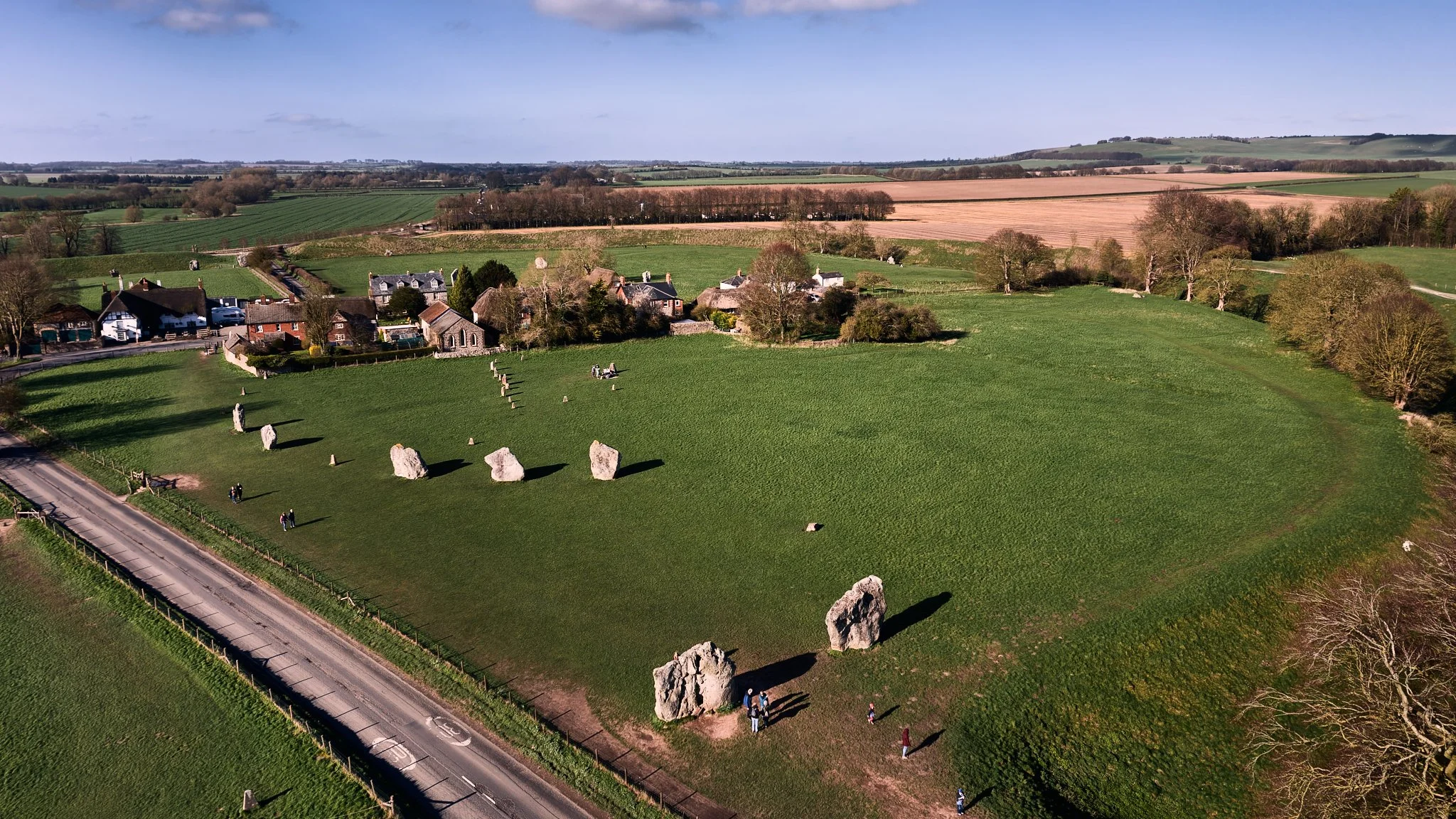
Avebury Entrance and Southern Inner Circle © Martin Urch
Sources
Avebury Alexander Keiller Museum
Stonehenge Visitors Centre Staff and Guides
Stone Lands — Fiona Roberts
Pagan Britain — Ronald Hutton
The Old Stones — Andy Burnham
Enquiries
Enquiries regarding book-length collaborations and extended narrative projects, including works developed in partnership with institutions or archive holders, are welcome.
If you enjoy my work, you can even consider throwing a few pennies into the tip jar. Click the ‘buy me a coffee’ button to help fund my research and writing. Until next time…

What Next?
Inside Iron Age Minds: From Ancient Picts to Modern Edinburgh Beltane
Edinburgh’s Beltane: From Ancient Galloways to Modern Flame
As the wheel of the year turns toward summer, I am moving my fieldwork from the silent stones of Avebury to the roaring fires of Edinburgh.
Beltane is not merely a festival; it is a profound social reclamation of Scotland’s Celtic heartbeat.
In this upcoming essay, I will explore Iron Age Celtic matrilocal society and the complex belief systems that once drove our ancestors to drive cattle between two fires for purification—and why thousands still gather on Calton Hill to witness the modern interpretation of this earth-honouring ritual.
In this deep-dive documentary, I will uncover:
Female Power Foundations: How Iron Age women managed land, inheritance, kinship, and household economy across generations.
The Living Hearth: How Edinburgh’s Beltane became the global epicentre for the resurgence of Celtic tradition.
The Social Pulse: Interviews and photography from the front lines of the 2026 festival, documenting the community that breathes life into the May Queen and the Green Man.
A Journey Through the Veil: Desktop research meets the raw reality of the fire-procession, exploring the psychological need for ritual in a modern world.
The torches are being prepared. I will be on Calton Hill this April 30th to capture the sparks, the shadows, and the stories of Beltane 2026.
Ensure you are subscribed to the archive to witness the transition into the "bright half" of the year.
Copyright
Martin Urch Photography owns the copyright to all writing and images.
Rights & Reuse
Reuse may be considered on a non-exclusive, fully credited basis, with copyright retained.