
Straw Bear
Whittlesey’s tradition, dancing, and a bear!
The Straw Bear is a rare and captivating remnant of an ancient ritual, and Whittlesey is the only place in Britain that keeps this extraordinary tradition alive.
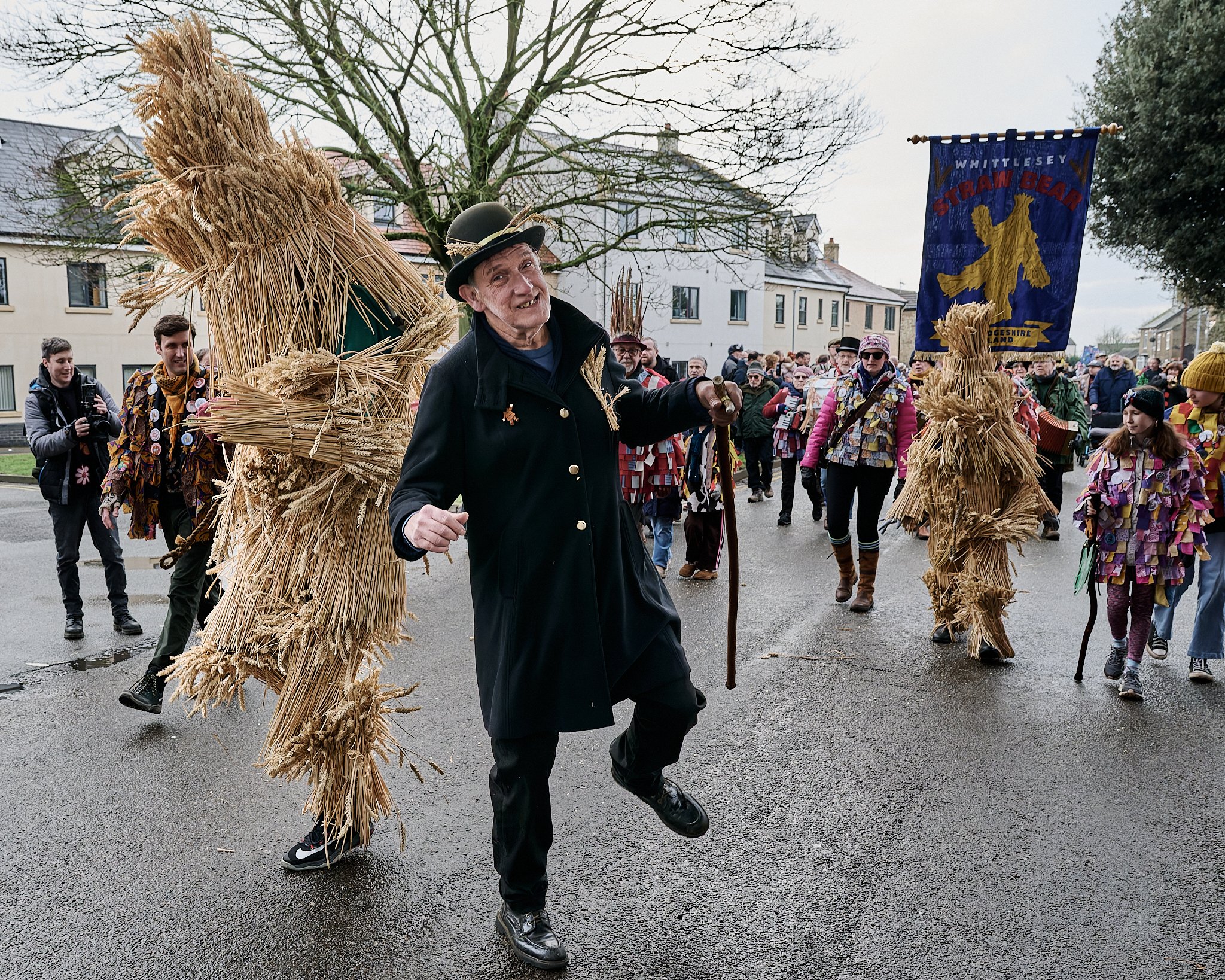
The dancing Straw Bear and Handler © Martin Urch
Prologue
I recall the 1973 film Wicker Man, with Christopher Lee as Lord Summerisle and Edward Woodward as Sergeant Howie. In it, the outsider police officer burns in a wicker cage so the crops may grow. Music, excitement, and disguise accompany a ritual whose purpose is never in doubt: something living must be given so that the land, and the community bound to it, may endure. The horror of the film lies not in cruelty but in certainty. Everyone believes the concluding human sacrifice will work.
In Whittlesey, the logic is older and gentler, but unmistakably related. Here, the crops themselves dance first — stitched into a towering Straw Bear, led through the streets to fiddles, drums, and the steady rhythm of boots on tarmac. He bows, capers, and turns, a walking harvest animated by noise and goodwill, embodying the promise that the fields will wake again. Later comes the ending that modern eyes prefer to overlook: the understanding that this living sheaf cannot remain — the year must be given back to itself, and that even joy, once embodied, must finally be unmade by flames.
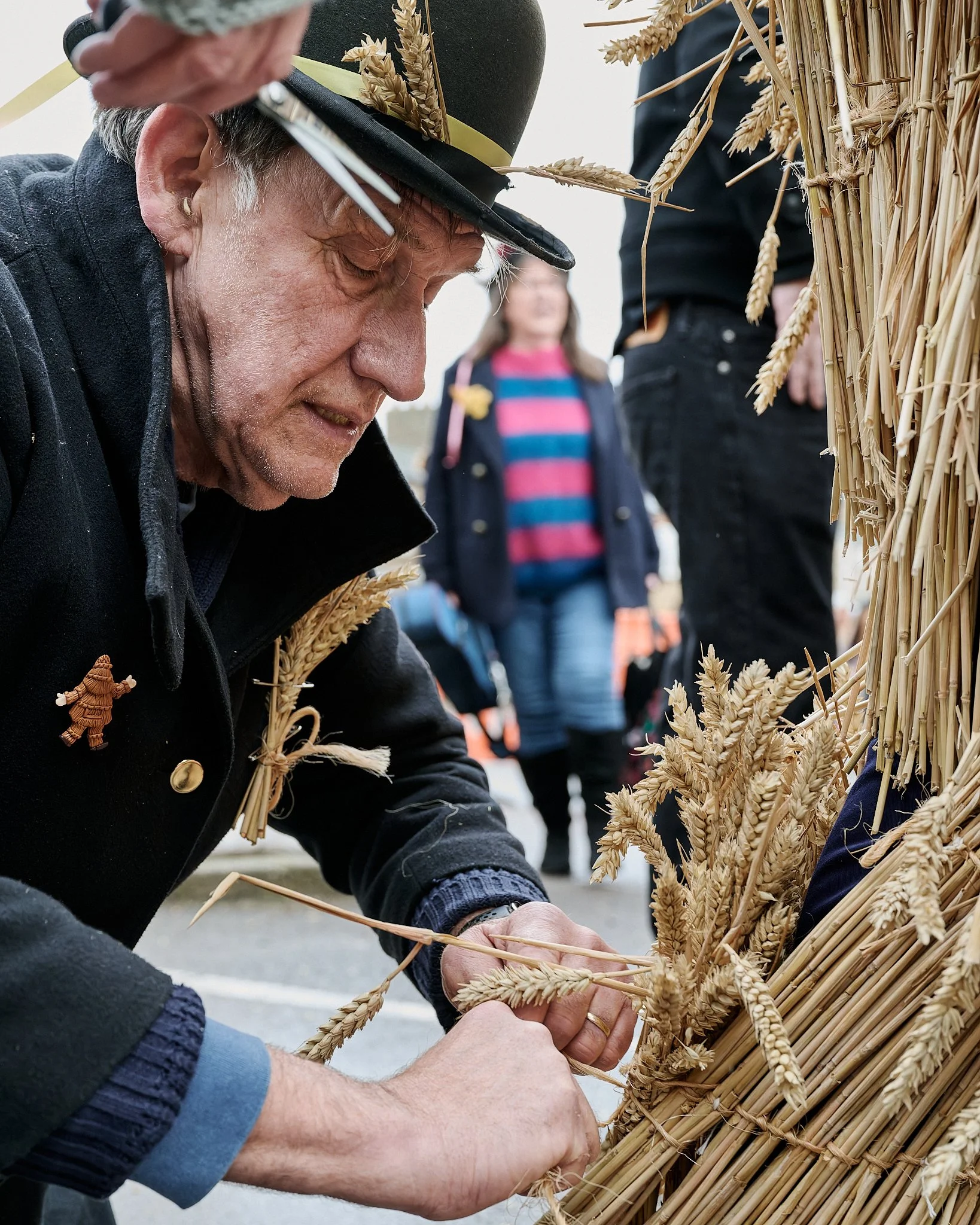
Straw Bear running repairs © Martin Urch
Introduction
From last month’s East Kent Hooden Horse to the Fenland Straw Bear, this photo essay continues a journey through England’s ancient agricultural winter customs. Here, Plough Monday unfolds in image and motion—its symbolism, Molly dancing, and a ritualised hope that is shaped by the older belief that winter is only broken once its due has been paid.
The Straw Bear traditionally emerged when the fields lay frozen or waterlogged and agricultural labour came to a standstill. It is a circumstance that feels uncomfortably familiar this January in the UK, relentless in rain, flooded fields, and ground too frozen to take a plough!
History
Today Strohbär (straw bear) customs are more common in parts of Germany and central Europe. Where folklore bears symbolise winter, wildness, and vegetative power. But in Britain, Whittlesey remains the sole surviving and celebrated example of this winter-disguise custom, recorded locally from at least the early 19th century, though it is certainly older.
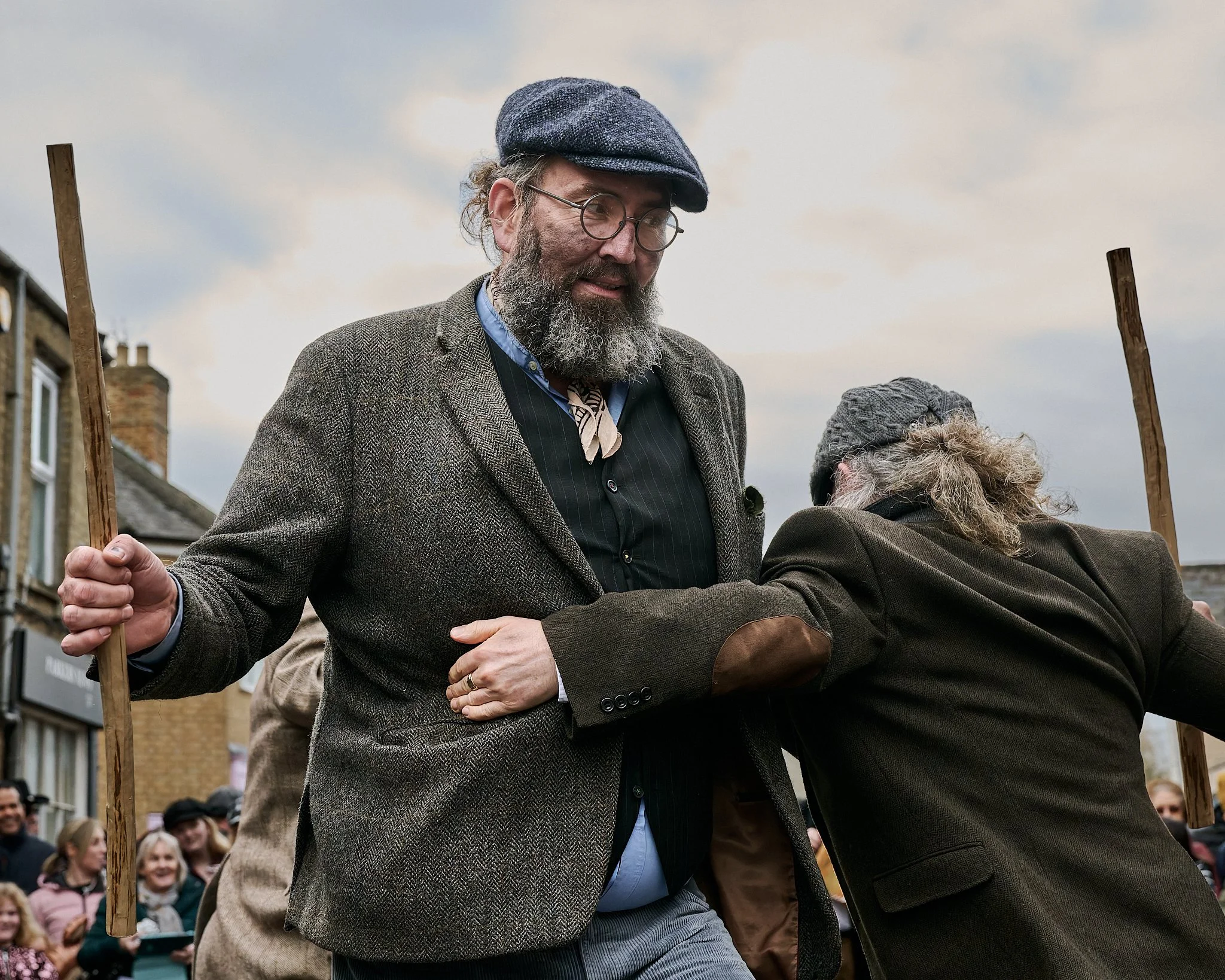
Tylers Men performing Molly style © Martin Urch
In its earliest form, the Straw Bear was enacted not as an organised festival but as a necessity born of winter hardship. Farm labourers, thrown out of work by frozen ground and sodden fields in the weeks after Christmas, would gather informally — often at a farmhouse, cottage, or alehouse — and bind one of their number into a dense casing of straw until he became a moving effigy of the harvest itself. Accompanied by a handful of companions, and usually by musicians with fiddles or drums, they set out through the town, visiting homes, shops, and inns.
At each stop, the Bear would dance, not elegantly but insistently, stamping and turning to prove he was alive beneath the straw and to earn a few coins, food, or drink for the group. The music drew attention, the dancing justified the ask, and the procession moved steadily on. For those who took part, the custom was both livelihood and release — a way of surviving the dead season of the agricultural year by transforming enforced idleness into noise, movement, and a shared assertion that the land, like the Bear, would one day stir again.
My Experience
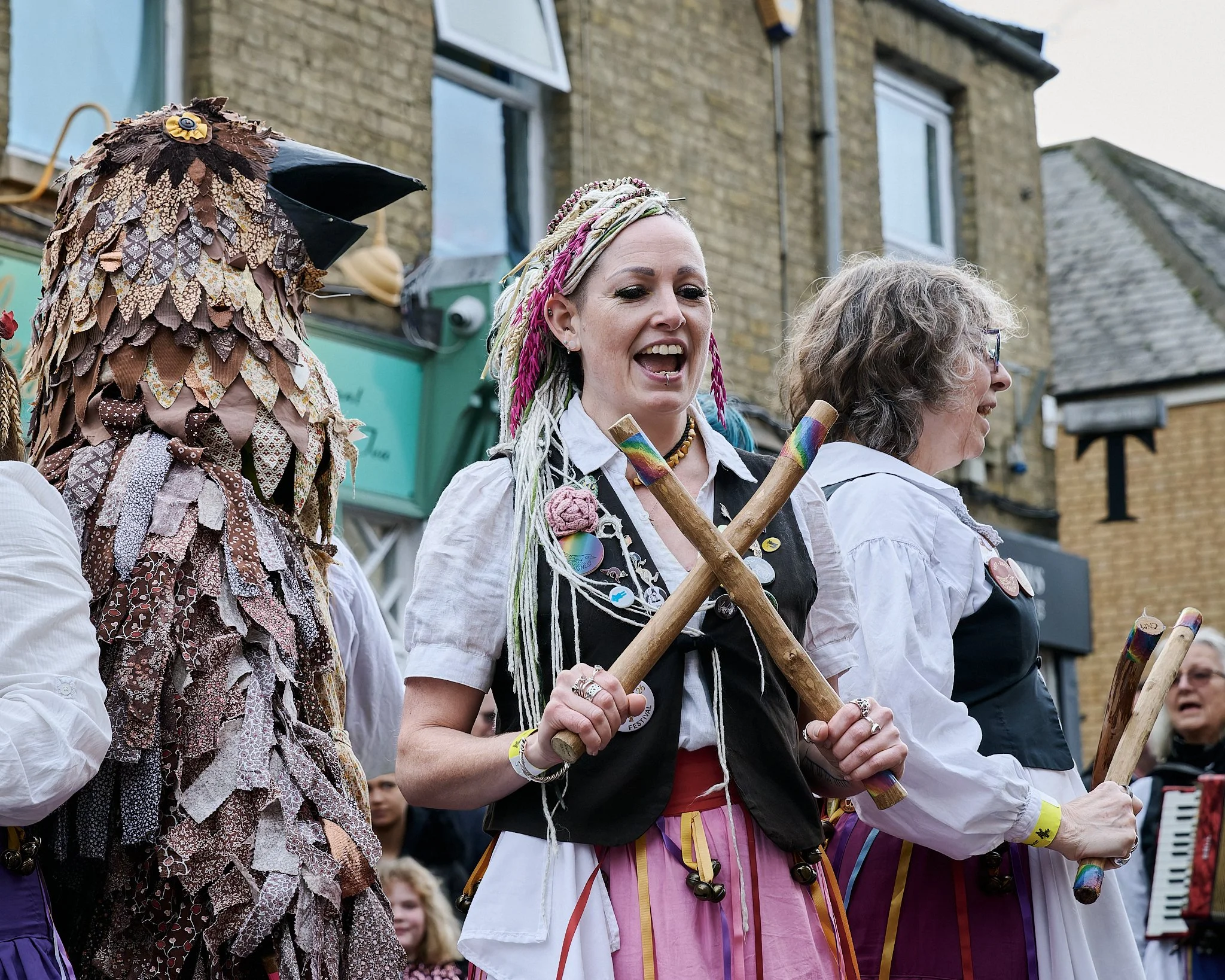
Cuckoo’s Nest - Cotswold Morris © Martin Urch
I arrived in Whittlesey at 10:30 am to join performers outside the Manor Leisure Centre. Imagine over 30 vibrant Morris Dance revival styles all crammed into a small space: the traditional Cotswold Morris, waving handkerchiefs, sticks, and bells on their legs; the rhythmic, raucous Border Morris from the border of England and Wales; the percussive footwork of Clog Morris from England’s industrial North West; and the high-energy, interlocking sword dances of Rapper. Particularly captivating for the Straw Bear festival is Molly Dancing, dressed in tatters and distinctive facial-disguise paint, historically linked to Plough Monday in East Anglia and known for its lively dancing.
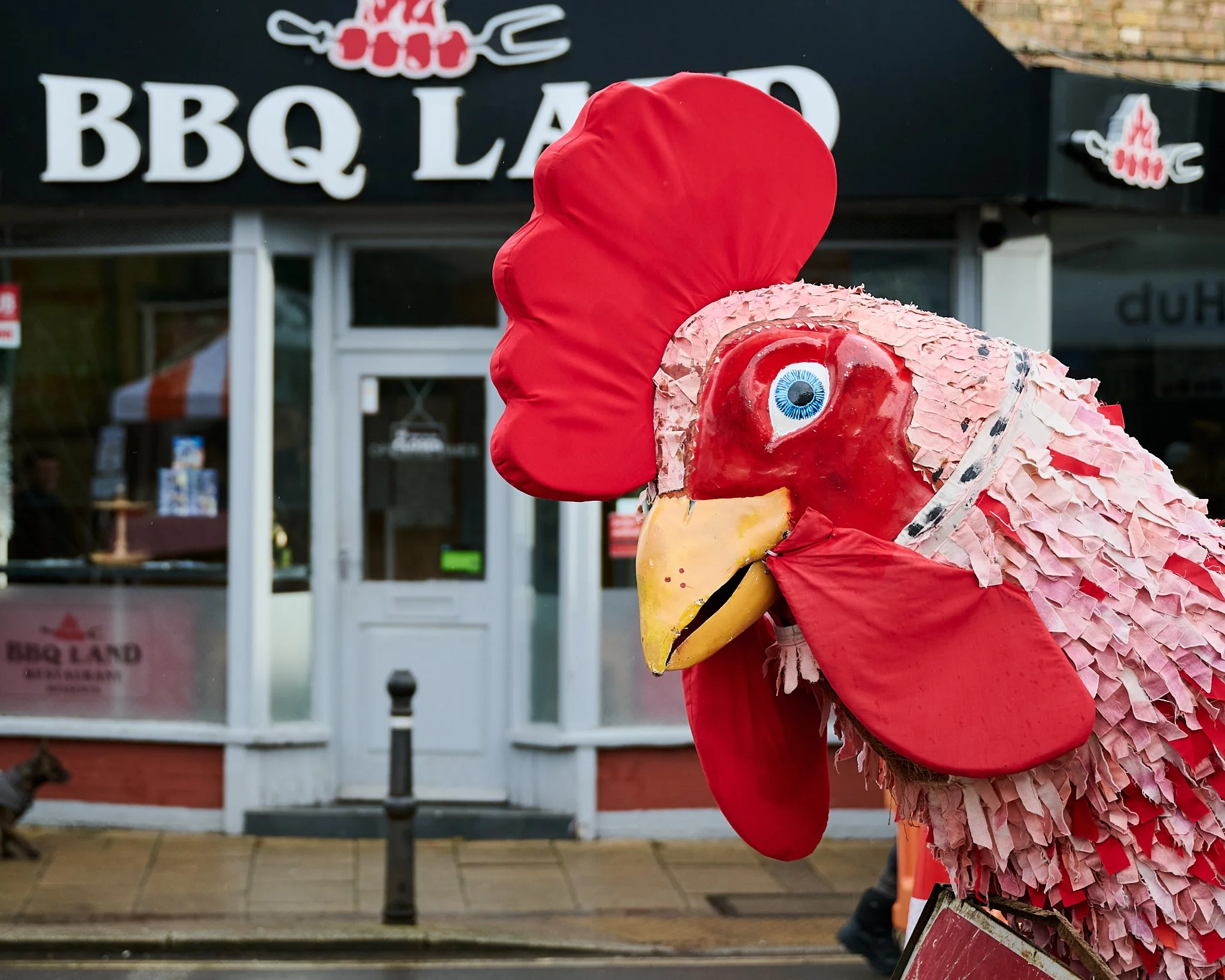
BBQ Chicken © Martin Urch
Among over 250 Morris dancers, musicians, and performers, I watched the Straw Bear, fully energised and leaping to lively tunes, led by his handler through the bustling dance groups to kick off the procession and street festival. Outside the Leisure Centre gates, more than twenty press members, amateur photographers, and YouTube creators jostled in the rain for the best shot of the vibrant scene along Station Road. A riot of performers, surrounded by over 2,000 spectators, basking in the electric atmosphere of the event. At the end of Market Street, the parade stopped while the Morris groups performed across eight outside locations. It was here that I saw the Peterborough Morris guising cockerel stood before the BBQ Chicken sign — too good an opportunity to miss.
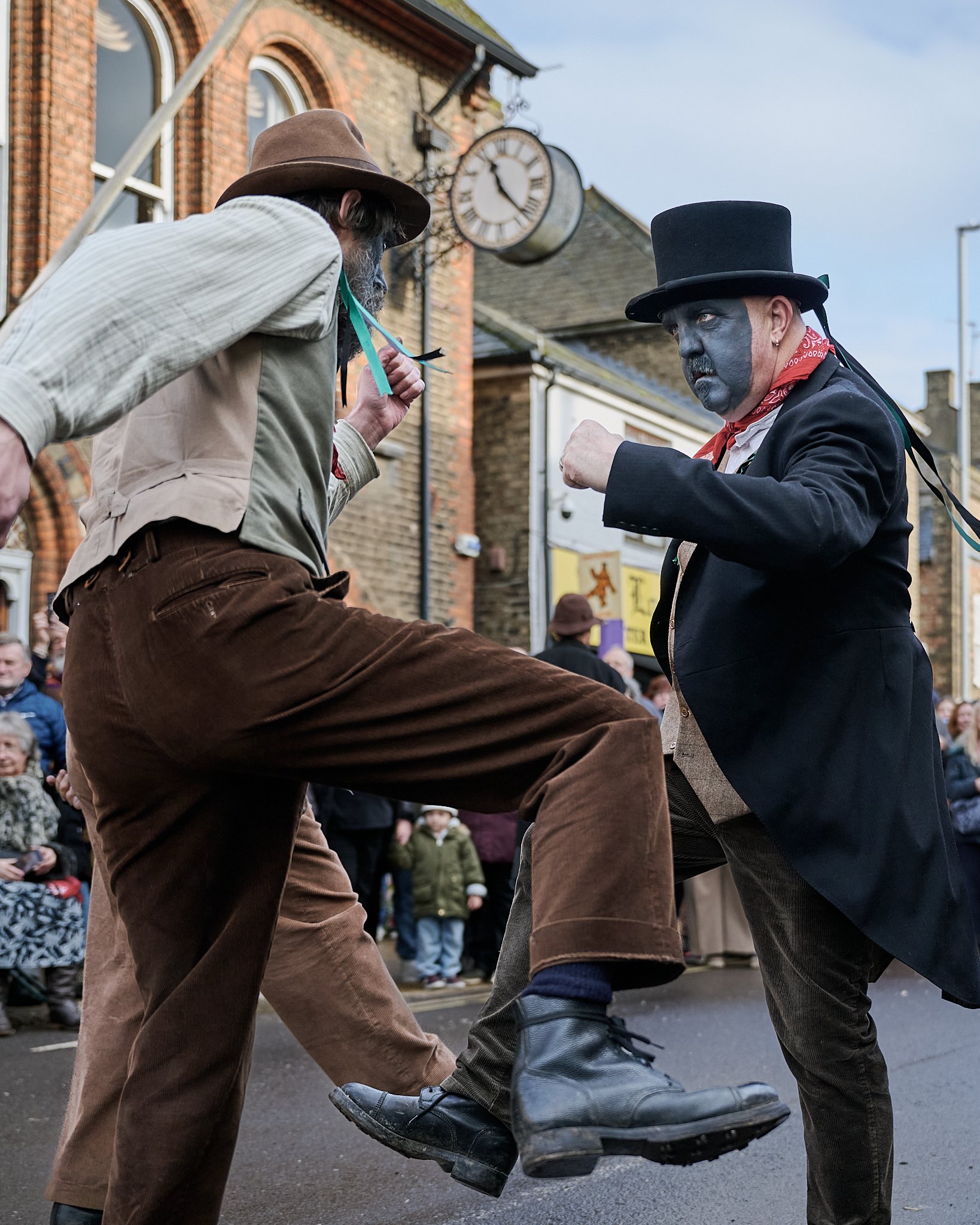
Old Glory darkened faces © Martin Urch
There were more Morris teams than any one pair of eyes could properly take in, yet one group asserted itself with such force that it was impossible not to follow them from street to street. This was Old Glory, Molly dancers of East Suffolk, carrying with them the rough winter voice of Edwardian times. Their faces were darkened in the old manner of disguise, their bodies held low and heavy, and their steps struck the ground with a percussive insistence that recalled the Plough Monday roads of earlier centuries. Nothing in their dancing sought elegance; instead, they leaned deliberately into coarseness, their movements pressing close, locking and breaking apart. The effect hovered between entertainment and clenched fist threat, with tightly interwoven, powerfully archaic shapes to photograph.
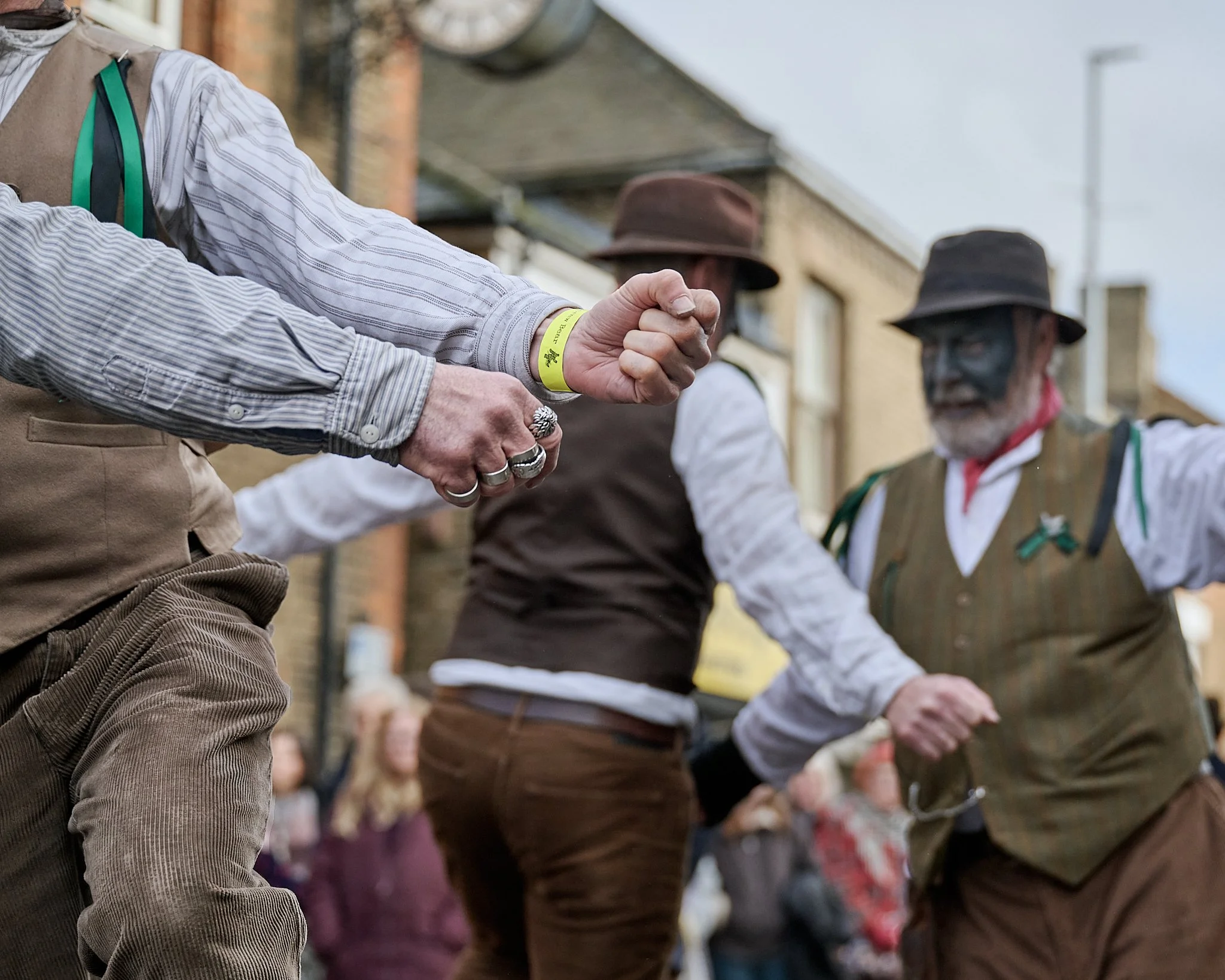
Old Glory - Molly dance © Martin Urch
Behind the dancers stood the musicians of Old Glory, ivy bound about their hats and their faces stained the green of winter leaves. They did not smile, nor did they meet the crowd’s gaze; their eyes stared, fixed and unblinking, as if listening to something older than the tune itself. The women at the accordions were especially arresting, their stillness at odds with the relentless pulse they drove into the street — compelling, and difficult to look away from. They seemed less like players than conduits, drawing sound up from root and soil, issuing it without flourish. In that moment, the music felt grown rather than made, a slow, vegetal source that compelled the dancers onward and reminded all watching that life, even in its bleakest season, does not stop.
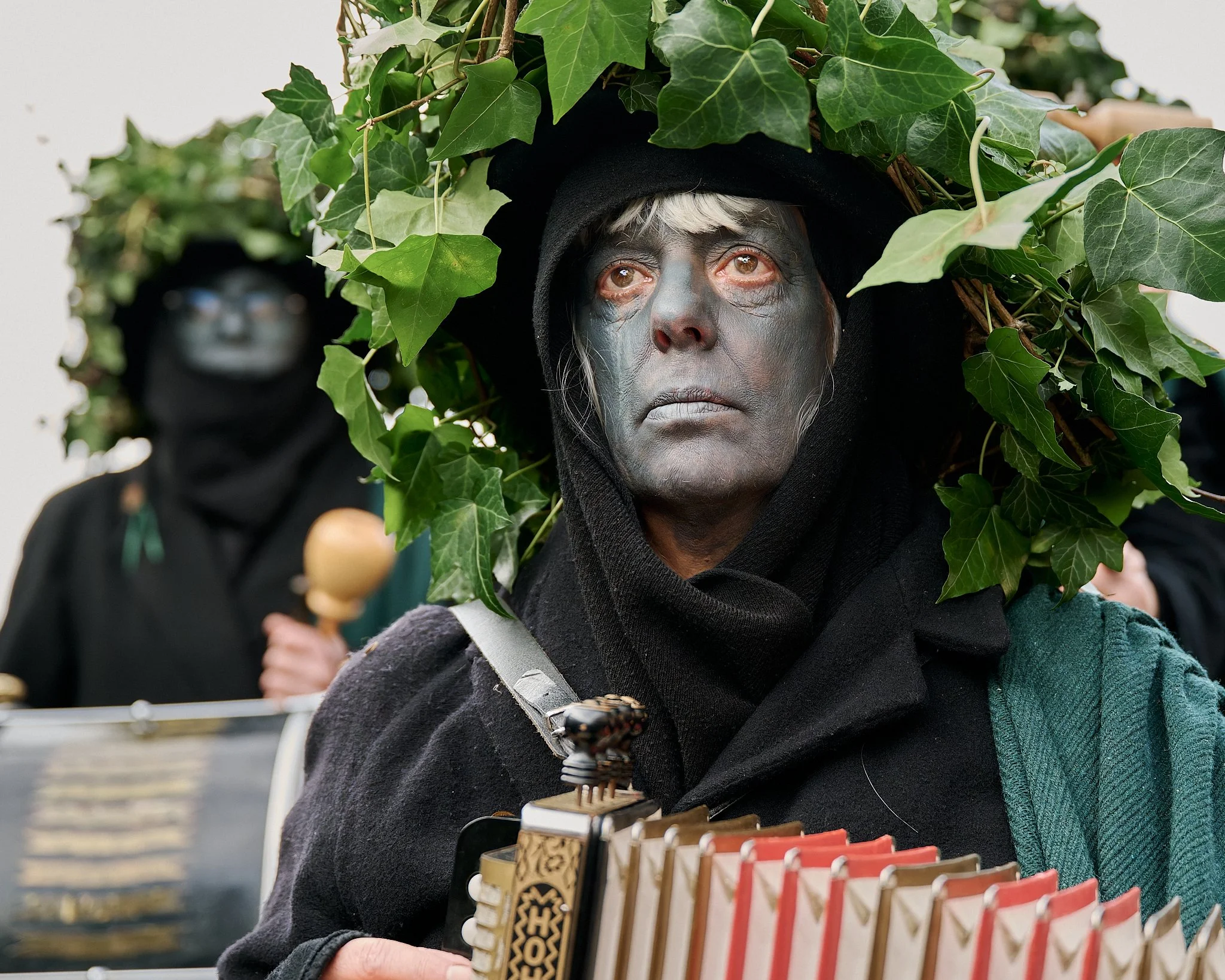
Old Glory Accordions © Martin Urch
Epilogue
Whittlesey Straw Bear is a festival not to be missed. The streets become a stage upon which the past rises alongside the present. The Straw Bear guise is a towering figure of tightly bound straw, moving with energy that belies his inert materials, weaving through the crowds. Around him, liminal figures parade in beastly guises, echoing the masked processions of centuries gone by. Molly dancers stamp, their darkened faces and ragged coats whispering of Fenland winters when the roads were frozen, and labourers sought sustenance and ritual alike.
Animal companions and historic costumes carry the weight of a time before written records, preserving the gestures, songs, and interpretations of a culture handed down orally and physically through generations. The festival is not merely a spectacle; it is a living archive, a ritual thread tying the present to the seasonal, communal, and pagan rhythms of Britain’s distant past. I witnessed and photographed the Saturday street theatre. On Sunday, the core performers reassemble for the ceremonial burning of the straw bear. The time of sacrifice for good luck in the growing seasons that lie ahead.
What next?
In 1808, with war on the seas and failure at home, the Blandys abandoned their Dorset farm and sailed toward the volcanic uncertainty of Madeira. What followed—risk, reinvention, and survival—would harden into a wine trade forged in fire and remembered across empires. Join me in Funchal as I follow a heritage trail shaped by danger, adaptability, and quiet courage.
Martin Urch Photography owns the copyright to all writing and images.