
Samhain
Glastonbury’s Wild Hunt
The Lord of the Underworld is seated on his throne, carried by his faithful Green Men, to lead dragons through the streets of Glastonbury, Avalon.
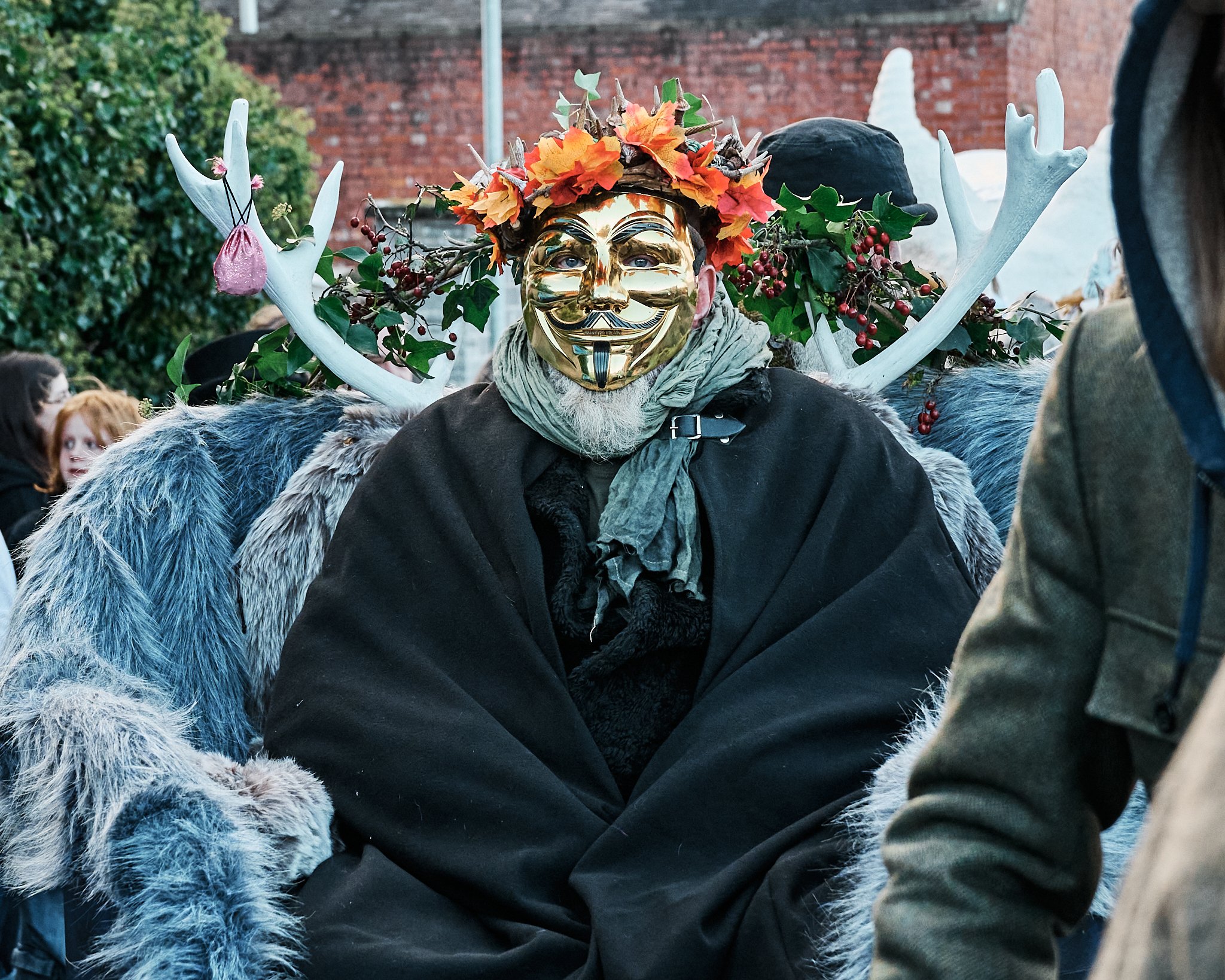
The Lord of the Underworld © Martin Urch
““How but in custom and in ceremony
Are innocence and beauty born” ”
Prologue
Last month, we delved into the intriguing history of the Gunpowder Plot, exploring King James I’s choice to celebrate his 5th of November 1605 deliverance from assassination with public bonfires. The link with this month’s essay is that his thanksgiving observance coincided with the ancient Celtic festival of Samhain, marking the end of the harvest season and the beginning of winter with public bonfires.
November 5th 2025, was the full Winter Moon — Samhain by the lunar calendar!
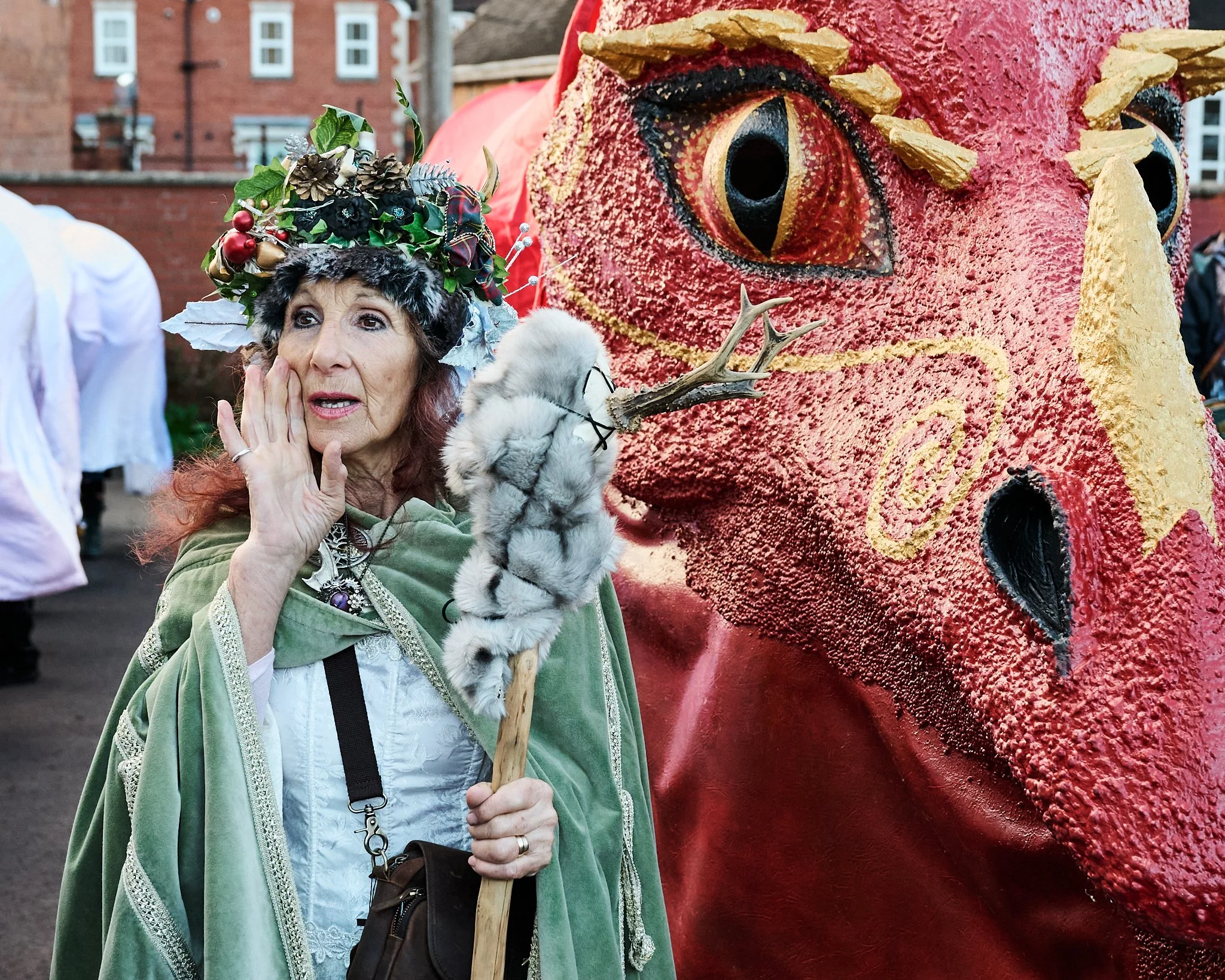
Call to Arms © Martin Urch
Samhain (pronounced “SOW-in”) is an ancient Celtic festival that signals the beginning of winter’s chill. During this mystical time, it is believed the veil between the living and the spirit world is at its thinnest, opening a portal for ancestors, fairies, dragons and otherworldly beings to cross into our realm. Celebrations include rituals to honour the deceased and glowing bonfires that serve as purifying symbols, illuminating the night with ancestral spirits and mystical energy.
You can experience the mystique of Glastonbury’s Samhain, also known as the Wild Hunt, where the streets come alive with legendary figures. Imagine Glastonbury Tor’s Lord of the Underworld leading a triumphant parade alongside the Summer King, Winter King, green men, fairies, and roaring dragons, all galloping through the town in a spectacular display of chaos and renewal, opening gates to the otherworld. In this folklore, dragons—embodying earth spirits—are woven into the very fabric of the hunt, transforming it into an epic battle for seasonal kingship.
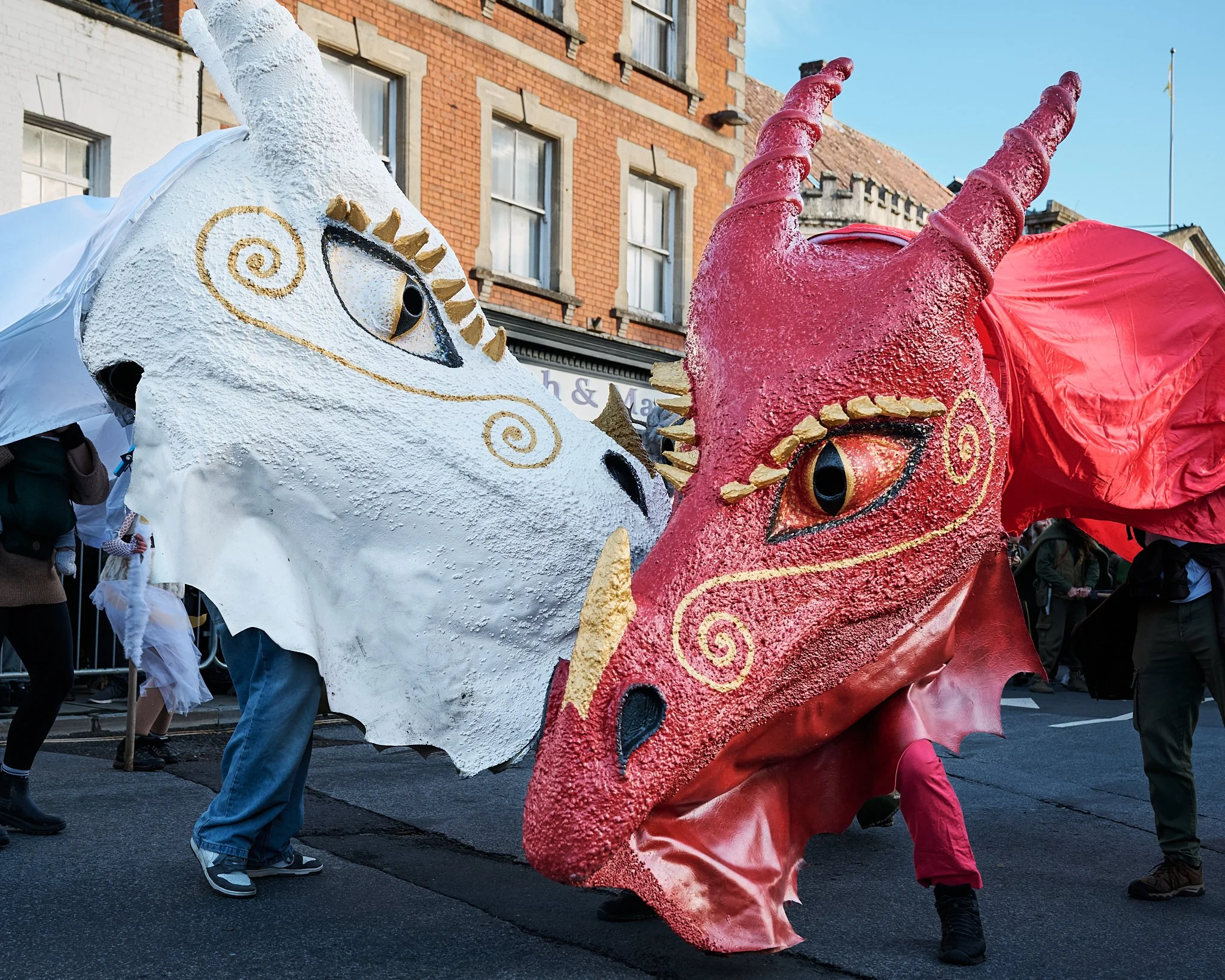
Battling Dragons © Martin Urch
Glastonbury
Nestled in the heart of the Somerset Levels, Glastonbury unfolds beneath the mysterious ascent of Glastonbury Tor and its towering presence. This enchanting town pulses with a sense of wonder, blurring the lines between myth and reality and is steeped in Arthurian legend. It is said to be the final resting place of Celtic King Arthur, possibly around 500 AD, when Britain fought the Saxons.
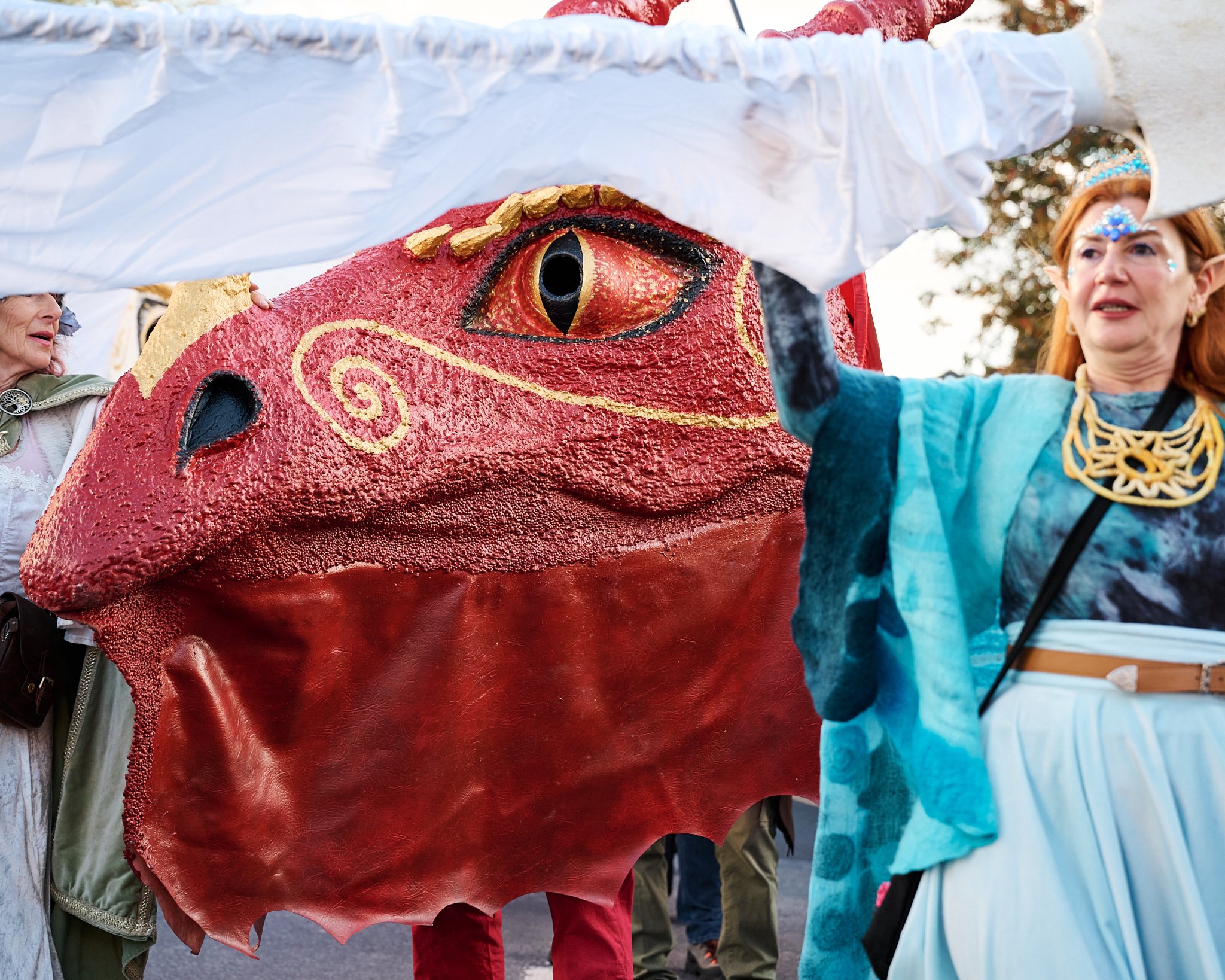
Fairies and Dragons © Martin Urch
Considered the Isle of Avalon, Glastonbury’s mystique continues to enchant visitors with bustling streets filled with enchanting crystal shops, herbal apothecaries, tarot readers, and cosy cafés that welcome explorers of every spiritual path. The town pulses with a lively community of artists, healers, and eco-conscious residents, all drawn by its renowned reputation as a hub of pagan revival and earth-centred spirituality, making it a truly captivating destination.
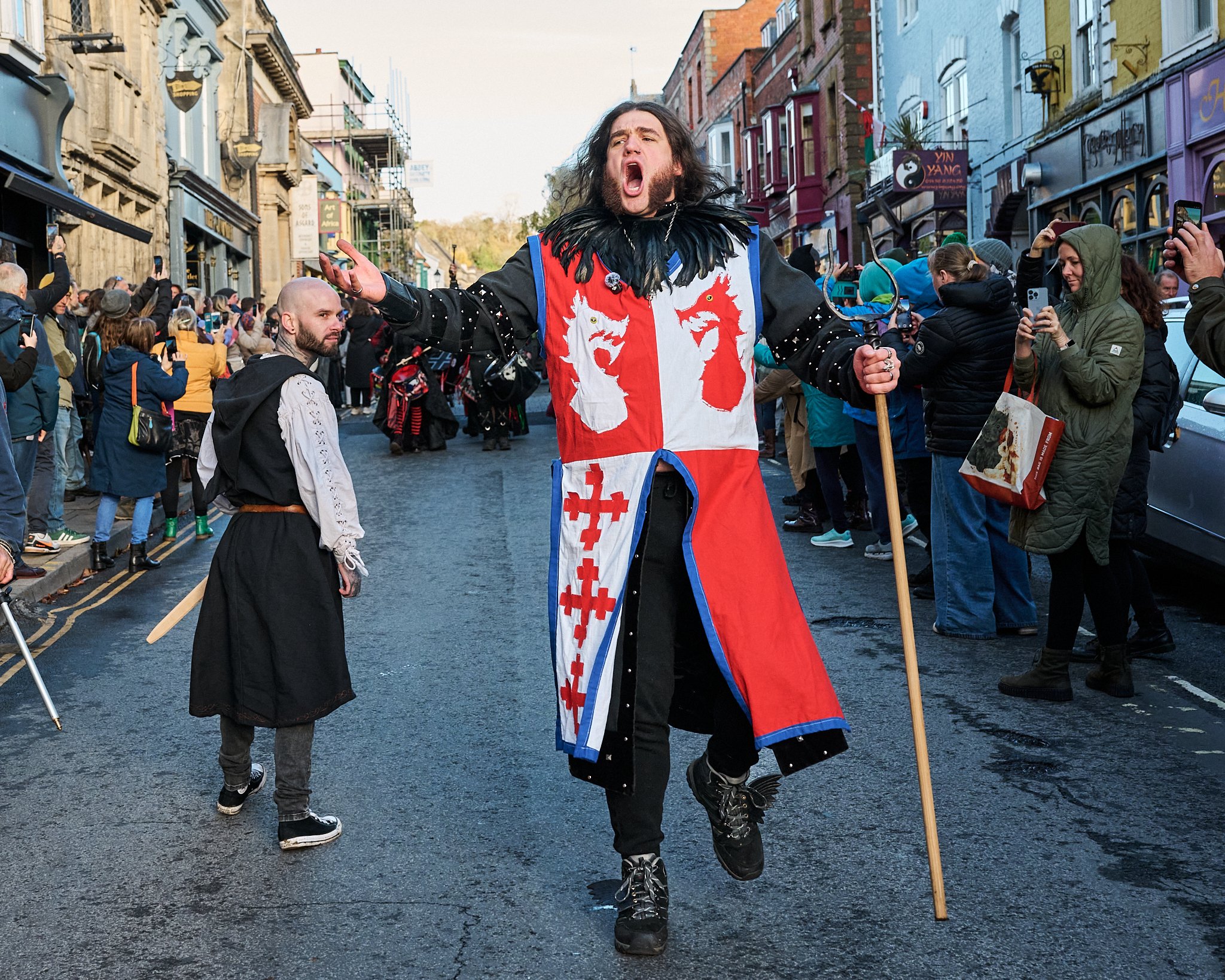
“The Dragons are coming” © Martin Urch
Glastonbury’s festivals bring the year to life, weaving together residents and visitors to celebrate nature's cycles. Since the 2010s, the Glastonbury Dragons group has transformed the Wild Hunt into a captivating Samhain event. This contemporary celebration breathes new life into a revered Celtic festival, honouring traditions while embracing modern magic-filled spirit. If you’re coming, prepare for an immersive experience with history, spectacle, and excitement!
My Experience
In Glastonbury, spirituality isn’t just a pastime but a way of life. It’s a continuous conversation between the land, ancient myths, and contemporary meaning. Far from being a wealthy hub by today’s material standards, it’s abundant in community and genuine connection.
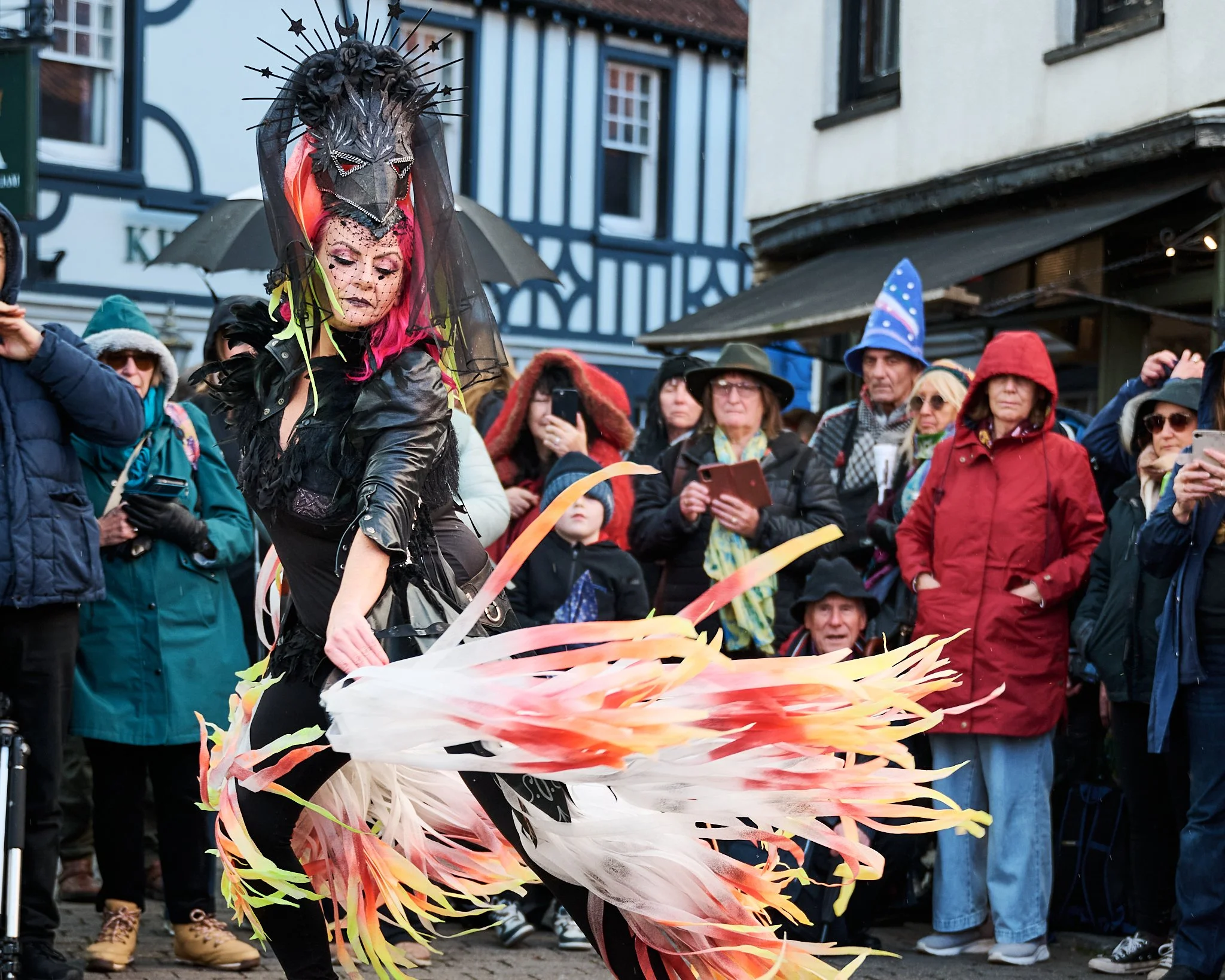
Lady Amp © Martin Urch
Glastonbury exudes a vibrant bohemian spirit, embodying a countercultural vibe that’s both captivating and authentic. Strolling through its streets or gathering at festivals, you’ll likely notice the lingering aroma of cannabis—an emblem of the town’s laid-back, alternative lifestyle. This isn’t just about rebellion; it’s woven into a broader tapestry of music, art, and spirituality, reflecting a community that values relaxation, creativity, and free expression.
Beyond the dusky ‘joint’ smells, your senses will catch a hint of herbal blends or incense wafting through the air — evocative mixtures of mugwort, damiana, sage, and other sacred plants burned for ritual, relaxation, or to set a peaceful vibe. Locals and visitors often use these herbs ceremonially, embracing smoke as a powerful tool for cleansing, grounding, and connecting. In Glastonbury, this free-spirited atmosphere exudes a mellow, hippie-inspired openness that invites curiosity and calm.
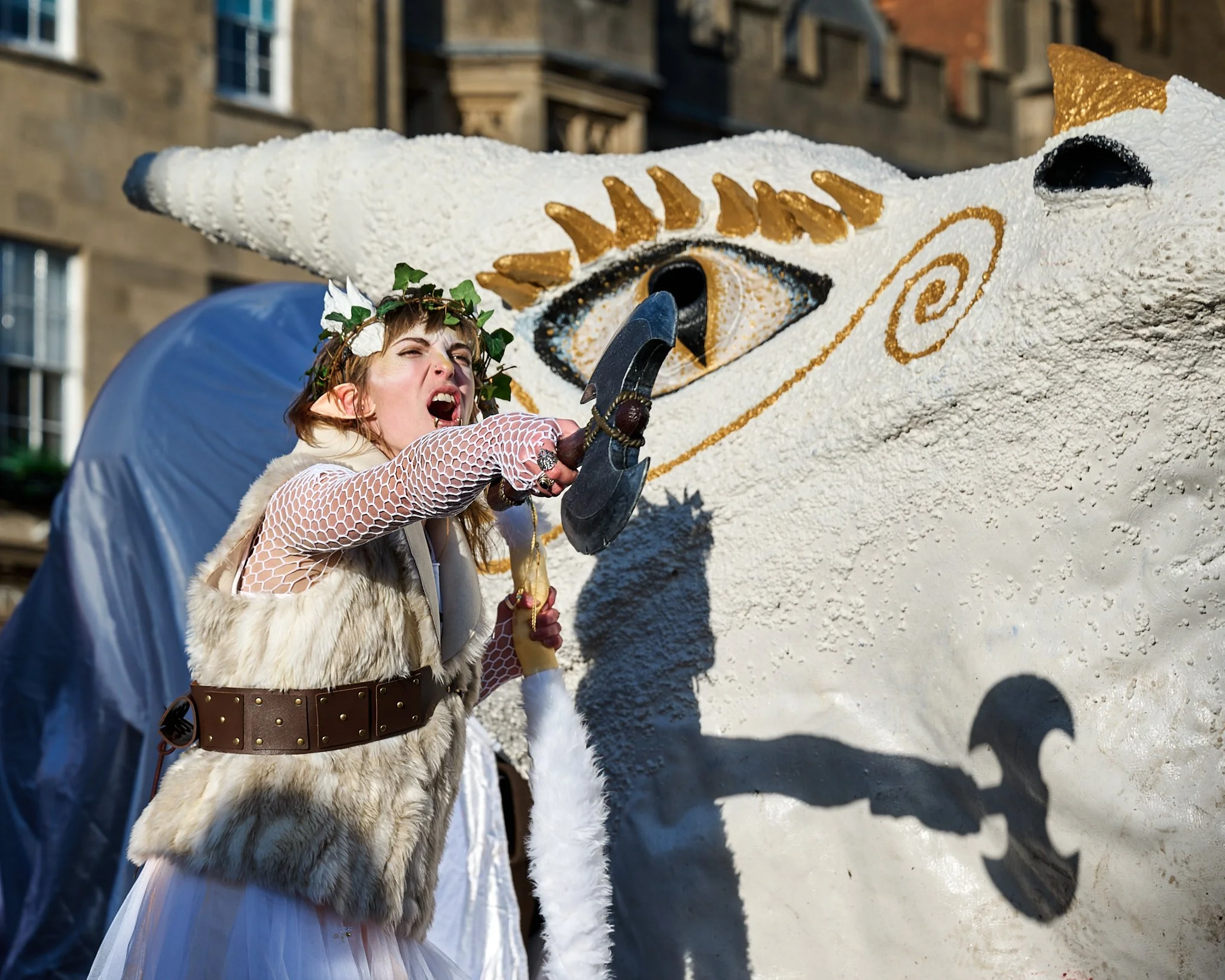
Winter Battle Cry © Martin Urch
It’s time for the thrilling Dragon Hunt! It kicks off at 3 pm at the Market Cross with lively Border Morris dancing and enchanting mystical dances performed by the Lady Amp. This captivating opening warm-up sets the stage for the main event. I sneakily slipped away from the crowd and met up with the final rehearsal of the procession at Butt Close car park, just behind St John the Baptist church.
Dragons roared to life, unleashing massive waves that shimmered along their long bodies, guided by the fierce summer and winter queens. I discovered Lord of the Underworld Gwyn Ap Nudd seated majestically on his throne within a hidden wall recess, attended by his loyal Green Men. All the characters were energised, preparing eagerly for the epic showtime that would begin at 4 p.m.
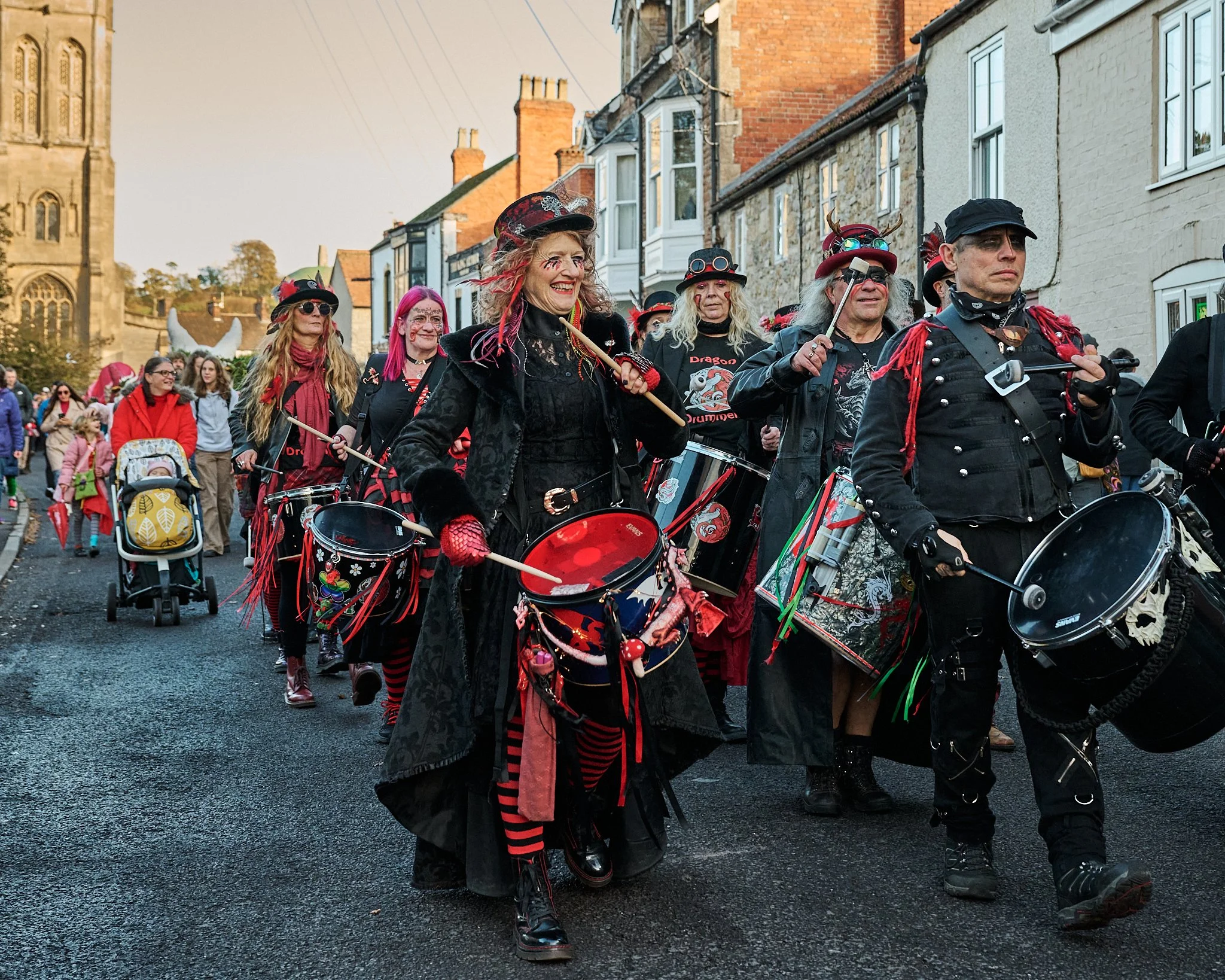
Dragon Drummers © Martin Urch
The procession surged into High Street, heading triumphantly toward the Market Cross. Crowds of thousands lined the streets, roaring with excitement as the thunderous beats of the Dragon Drummers echoed through the air. Glastonbury Dragons Herald roared, “The dragons are coming! Make way for the dragons!" The parade paused at the Market Cross for an epic showdown, with each dragon leader steering their fierce serpents into battle, filling the scene with thrill and anticipation.
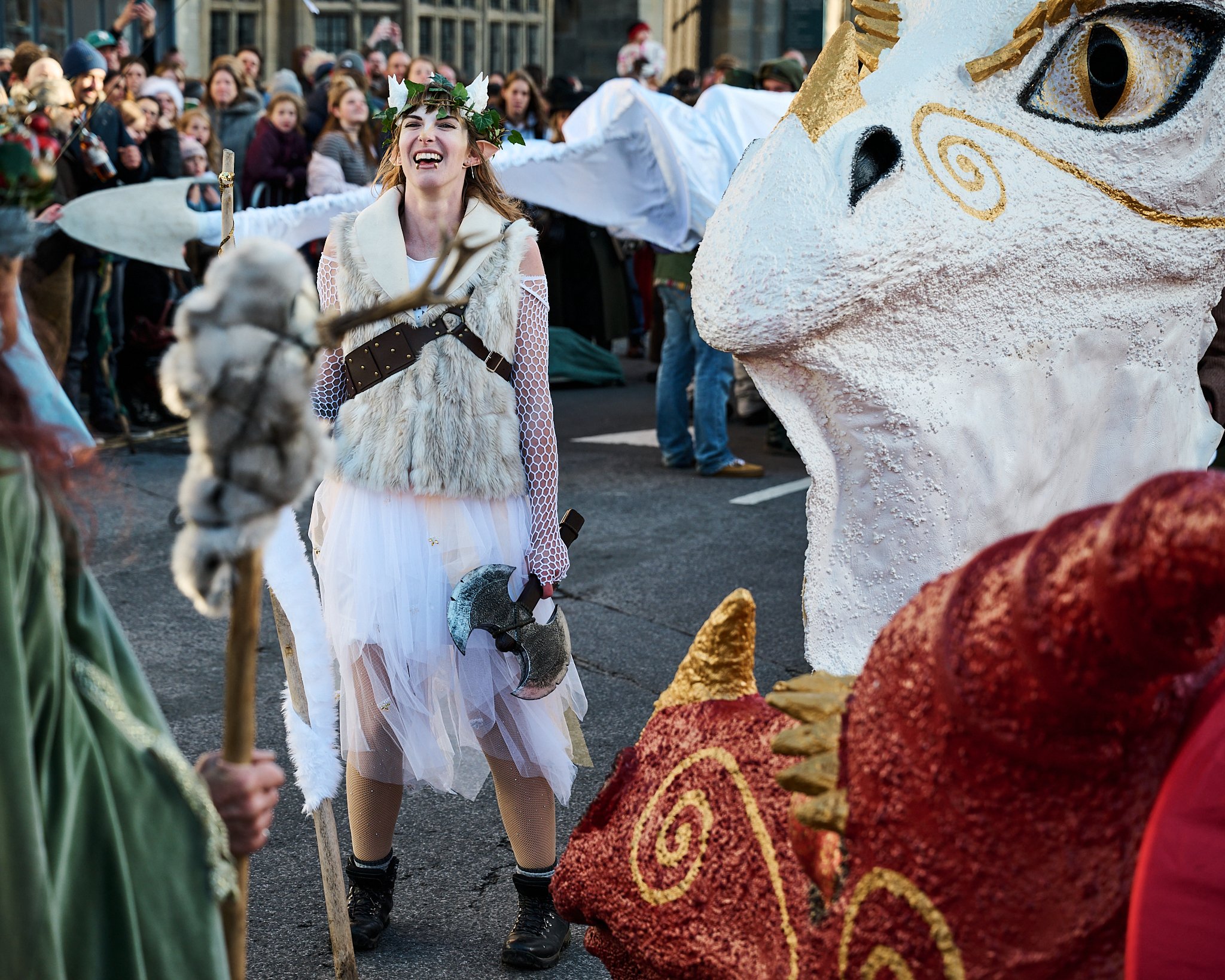
Winter Triumph © Martin Urch
Samhain’s celebration always ends triumphantly for the white dragon of winter. The procession then winds along Benedict Street, crossing a peaceful field toward the Tor Leisure Centre, where the rhythmic beats of Avalon drummers herald the arrival of the ceremonialists. The ceremony features an entertaining mock battle between the Summer King and the Winter King, with the Winter King emerging victorious. His victory comes with a vow to shield us all during the dark winter days.
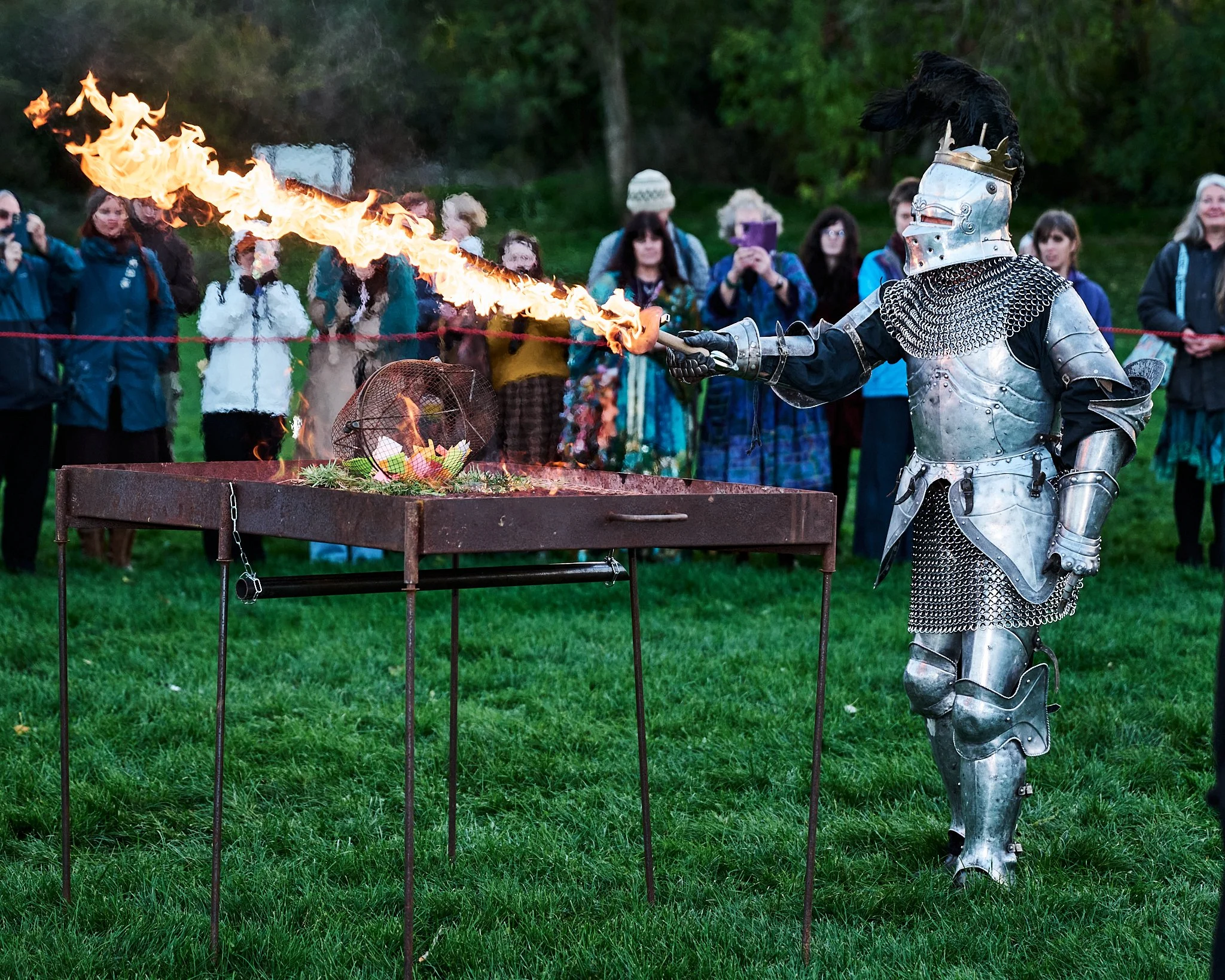
King Arthur ignites the fire © Martin Urch
During this meaningful ceremony, there’s much to cherish as it delivers a powerful message: to support and care for each other during the cold, short daylight days. The finale occurs when the mythical King Arthur appears dramatically clad in armour and wielding his flaming sword. He uses it to ignite a ceremonial fire, a sacred space where participants place their heartfelt remembrance notes to loved ones lost, creating a poignant and inspiring moment.
Epilogue
The Wild Hunt’s dragon folklore is deeply woven into Glastonbury’s legendary Arthurian and Celtic traditions, creating a captivating tapestry of myth and mystery. The red and white dragons’ story echoes in other British folklore, too, such as the legendary conflict between the native Celtic Britons and Saxon invaders in Vortigen’s Tower—an epic we’ll explore now.
Imagine a time when the mighty Roman legions withdrew from Britain, leaving behind a treacherous void filled with uncertainty and invasion. Into this turbulent chaos steps Vortigen (c. 425–470 AD), a legendary Briton king whose story is woven with struggles for sovereignty. Infamous for his decision to invite Saxon mercenaries to defend his land, his actions unwittingly opened the floodgates for the Saxons’ relentless invasion, laying the foundation for their eventual conquest of much of the island.
While historians largely accept that Vortigen was a real figure, his life story is woven with myth and legend. Embellishments that have grown over centuries. One of the most captivating stories is about red and white dragons under Vortigen’s Tower, where King Vortigen endeavoured to construct a formidable fortress in Wales.
The foundation would mysteriously crumble night after night, defying all efforts to build. Desperate for a solution, his magicians suggested using the blood of a fatherless boy. This ominous tactic eventually led to the emergence of Merlin, a mysterious and powerful figure born from a mortal woman and an incubus (a male demon).
Merlin told a startling tale: he said the tower’s failure was caused by red and white dragons buried deep beneath its foundations. When unleashed, these dragons clashed fiercely in the depths, with the red dragon (representing Celtic Britons) emerging victorious over the white (representing invading Saxons).
This legendary battle of red and white dragons foretold of Britons’ triumphing over the Saxons and around 500 AD, a series of battles were indeed won by the natives, the most famous of these was the Battle of Mount Badon (around c. 496–500 AD), where a British leader — later remembered in legend as King Arthur — halted Saxon expansion for several decades.
However, by around 600 AD, the Saxons, Angles, and Jutes dominated most of eastern and southern England. At the same time, the Britons were confined to Wales, Cornwall, Cumbria, and parts of Scotland, which was the most dramatic cultural and political shift in early British history.
What next?
In my January post, discover the enchanting world of Hoodening, Kent’s ancient December folk custom. Dive into the lively tradition of the hooden horse—a whimsical wooden beast paraded by disguised performers, blending pagan roots with Christmas revelry. Explore its history, rituals, and revival as a winter piece of East Kent heritage that continues to enchant today.
Martin Urch Photography owns the copyright to all writing and images.